
Last updated November 18, 2026
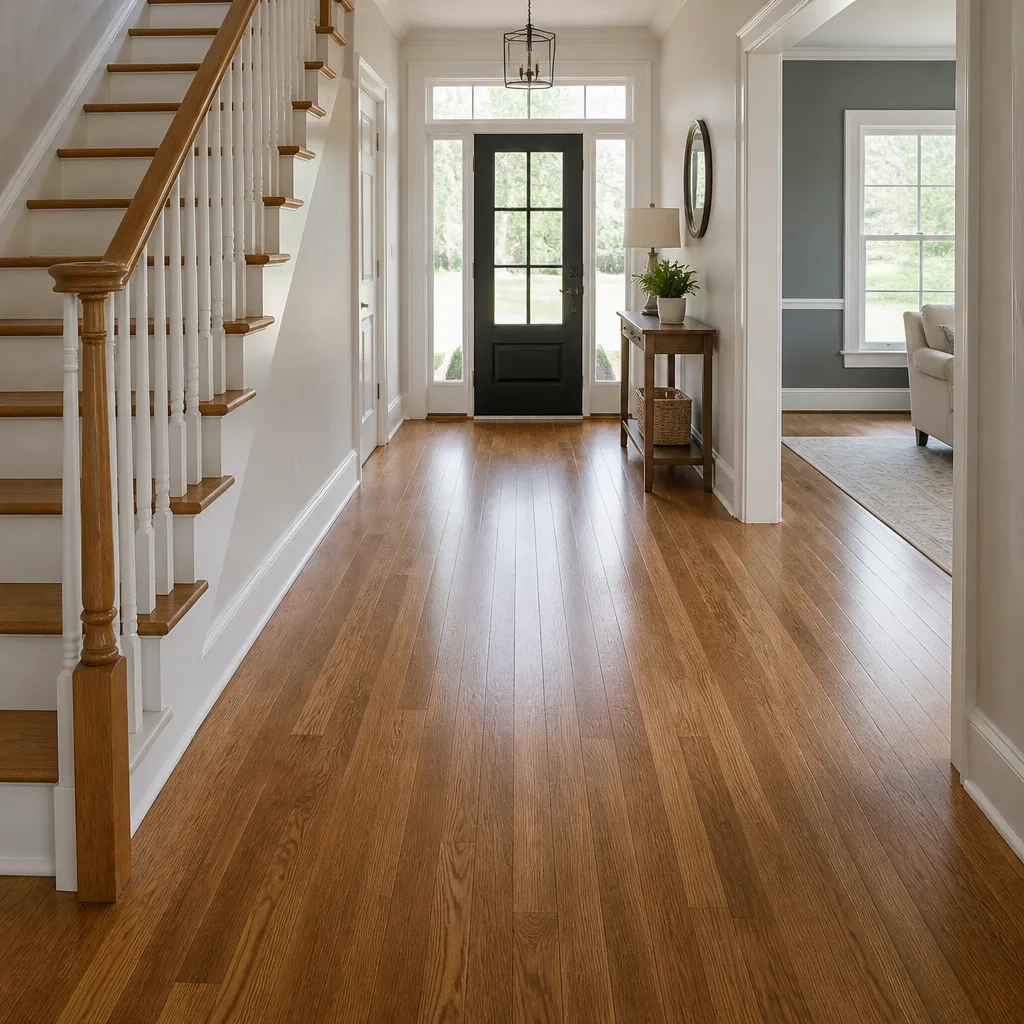 Hardwood
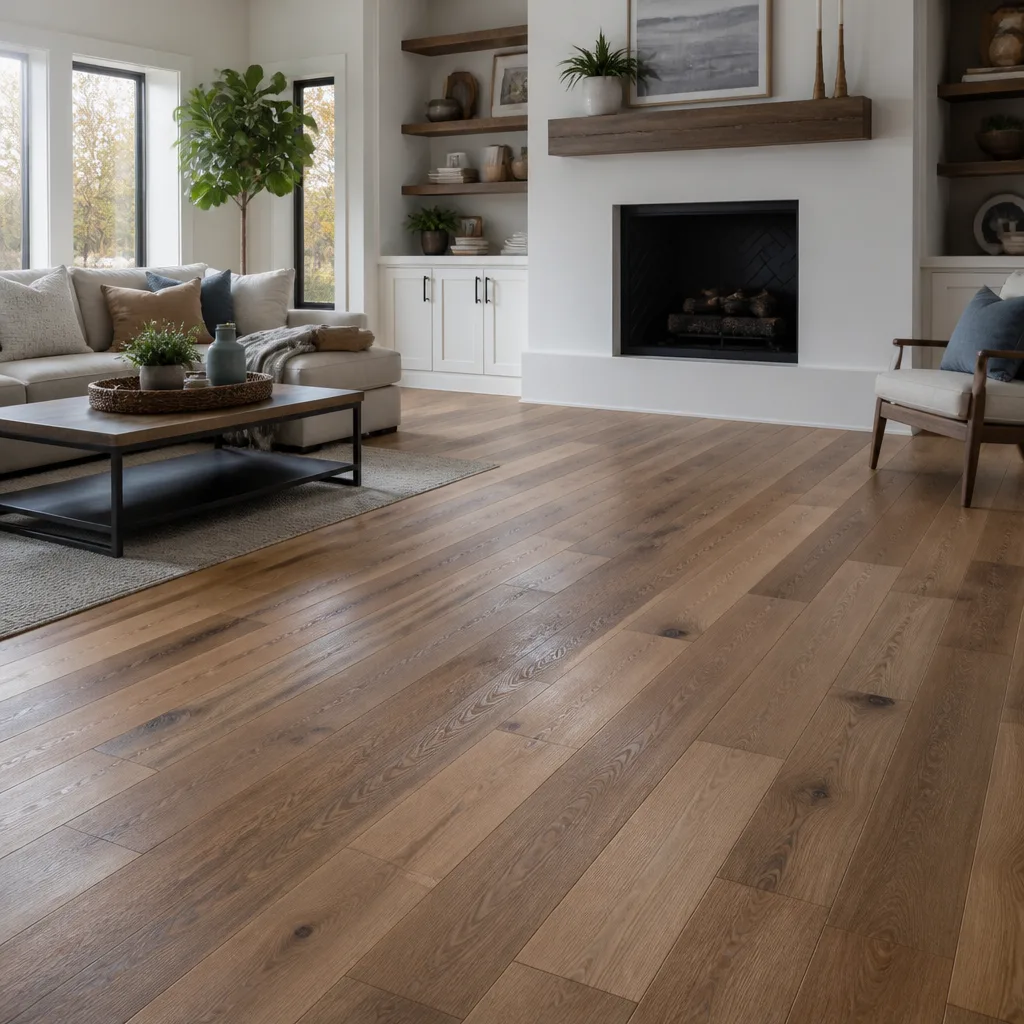 Engineered hardwood
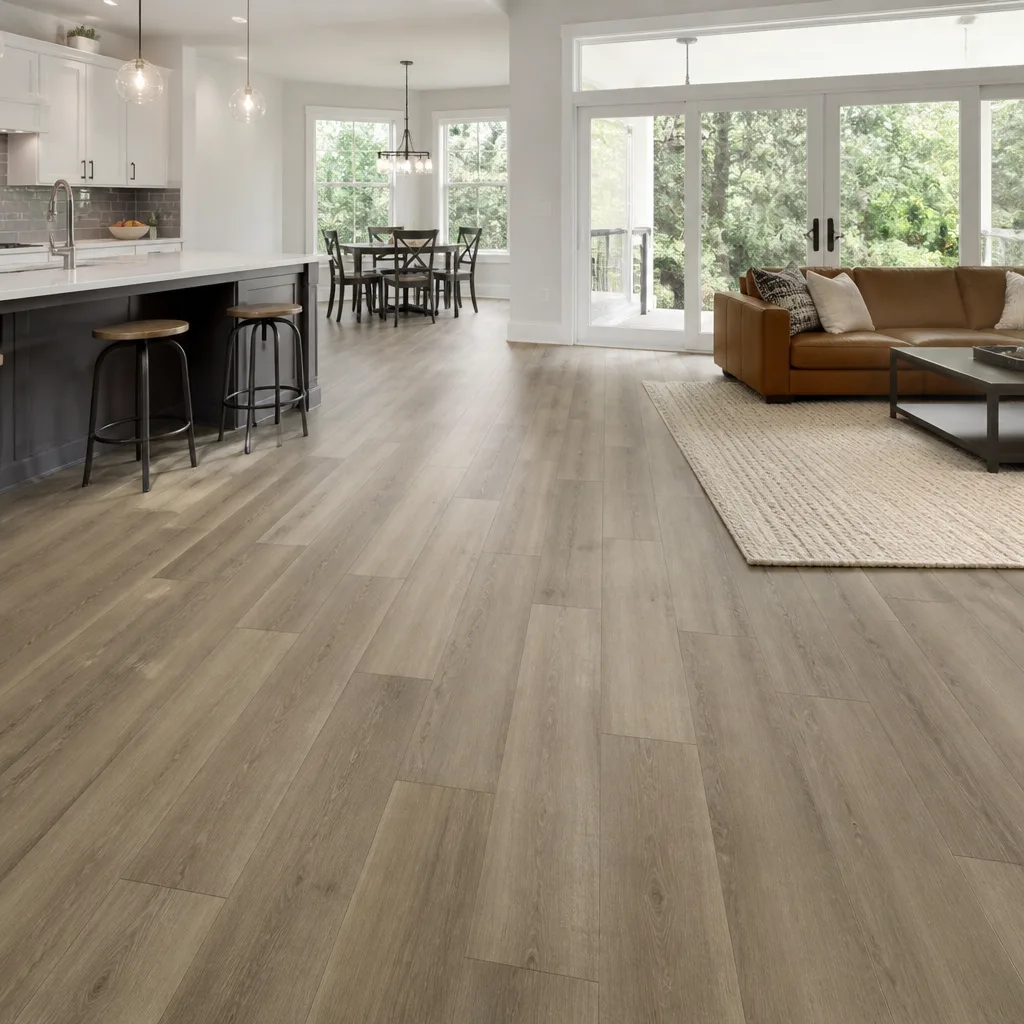 Luxury vinyl plank
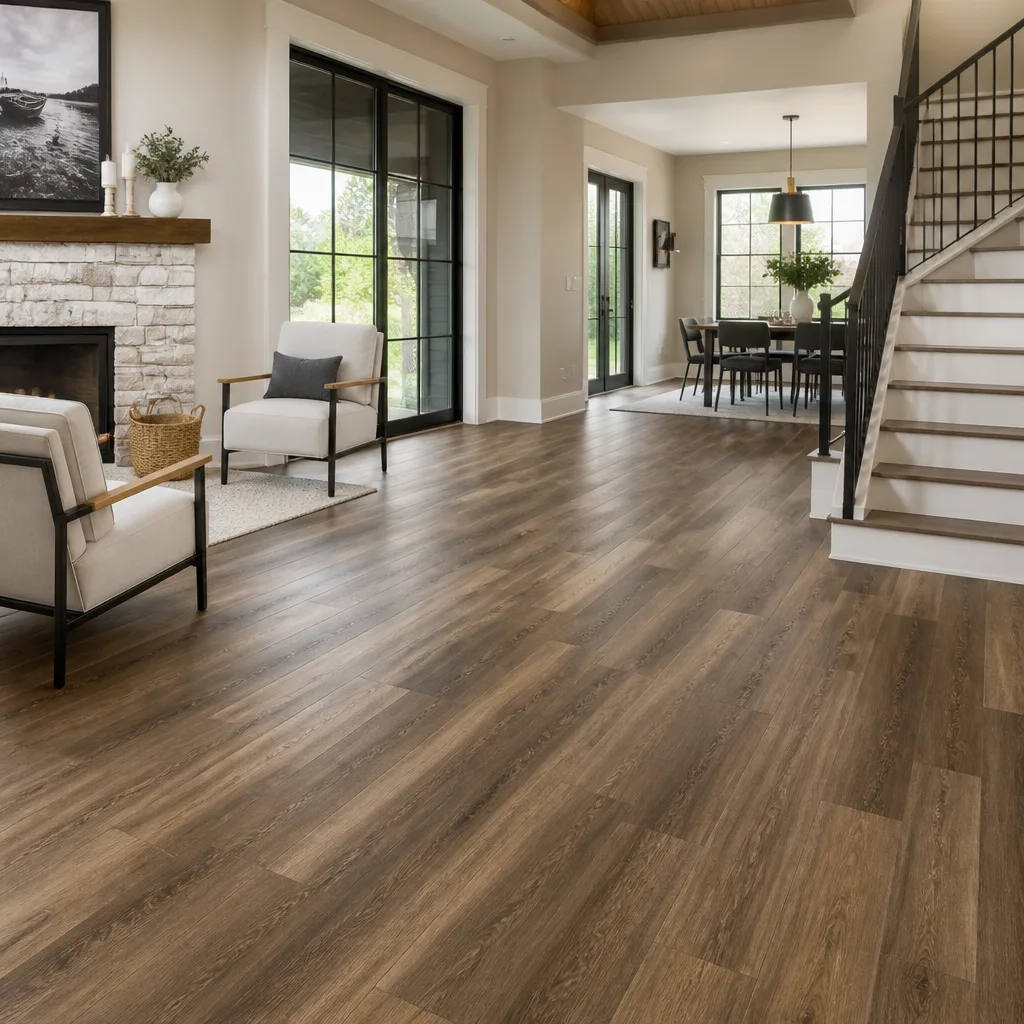 Laminate
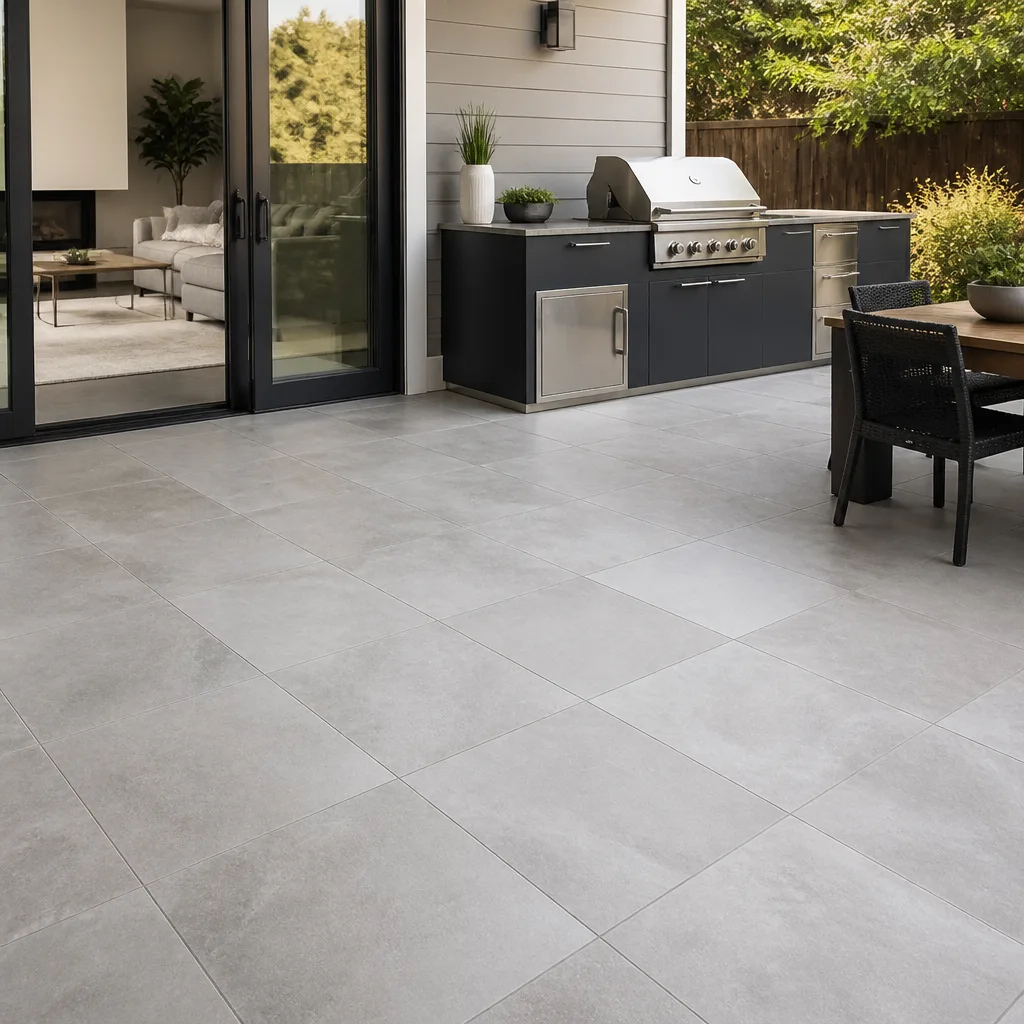 Porcelain tile
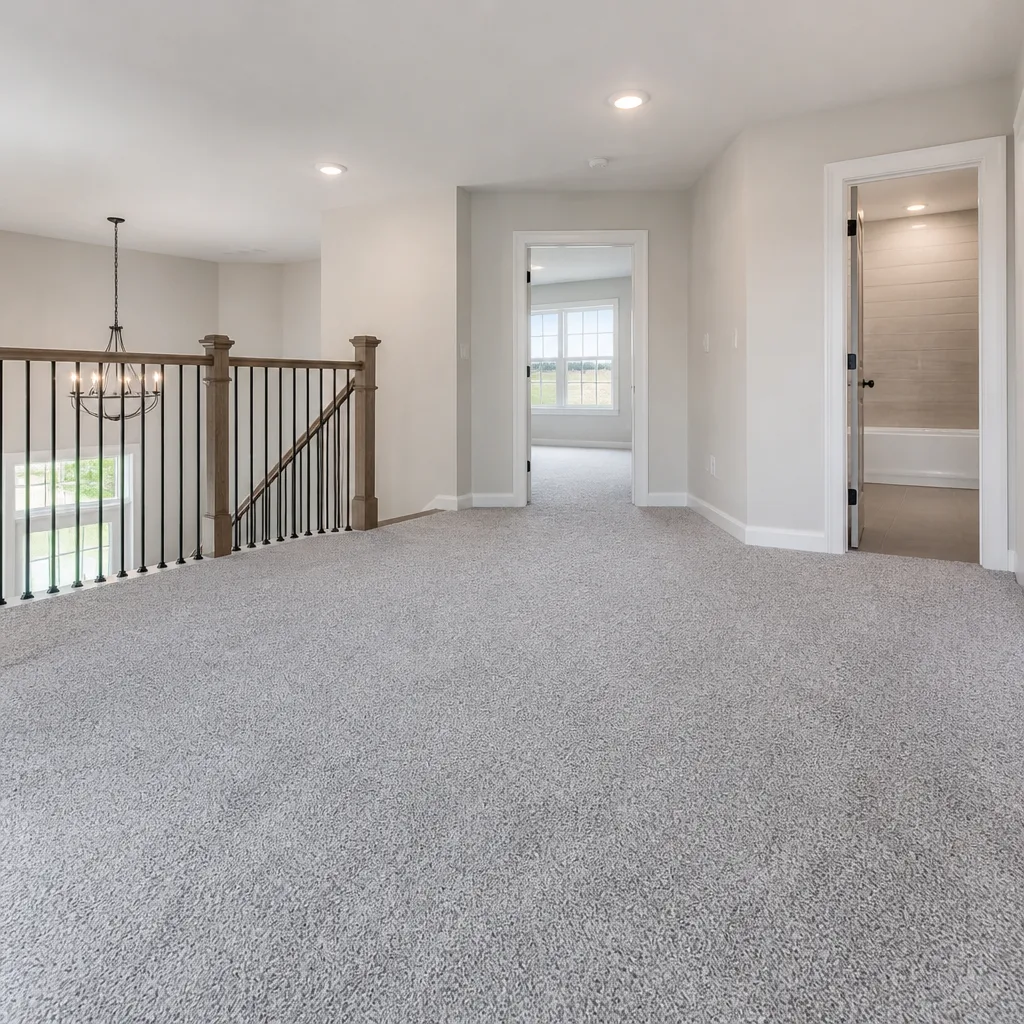 Carpet
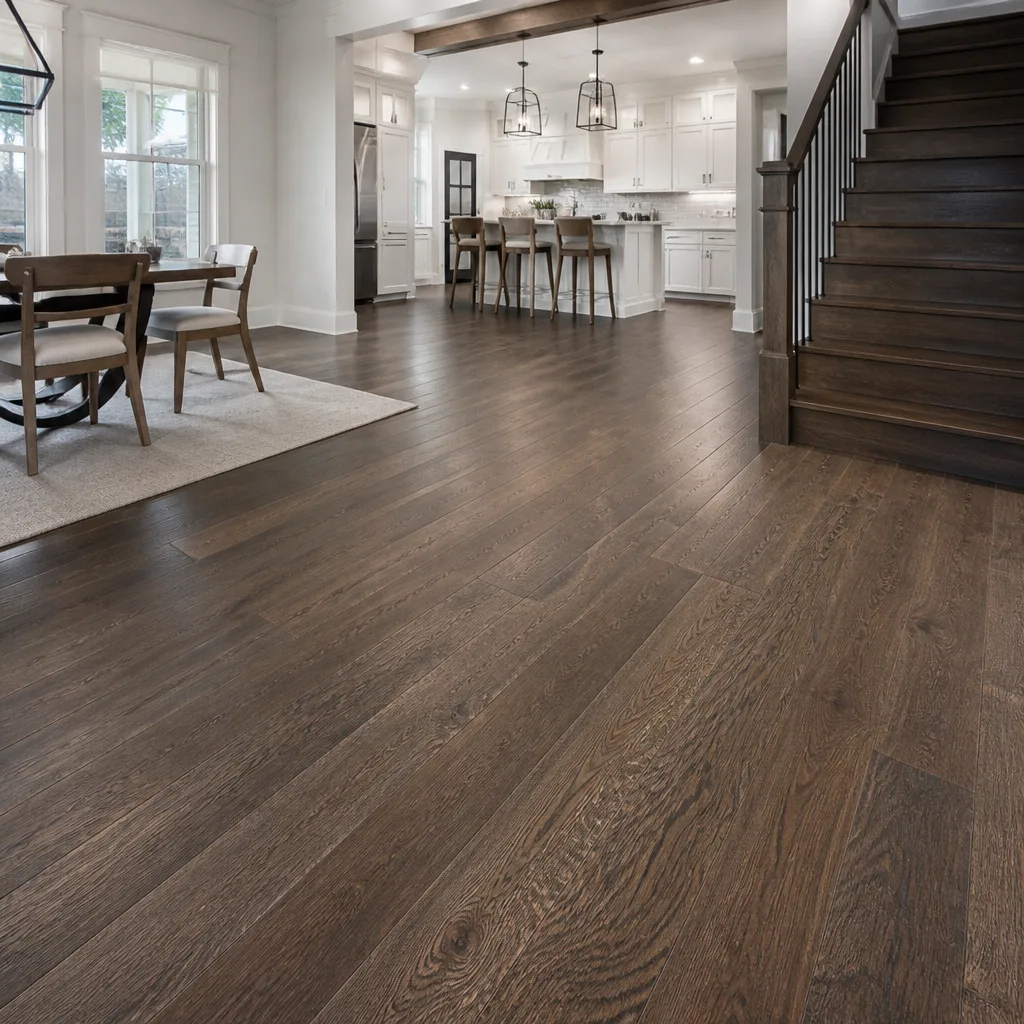 Shaw
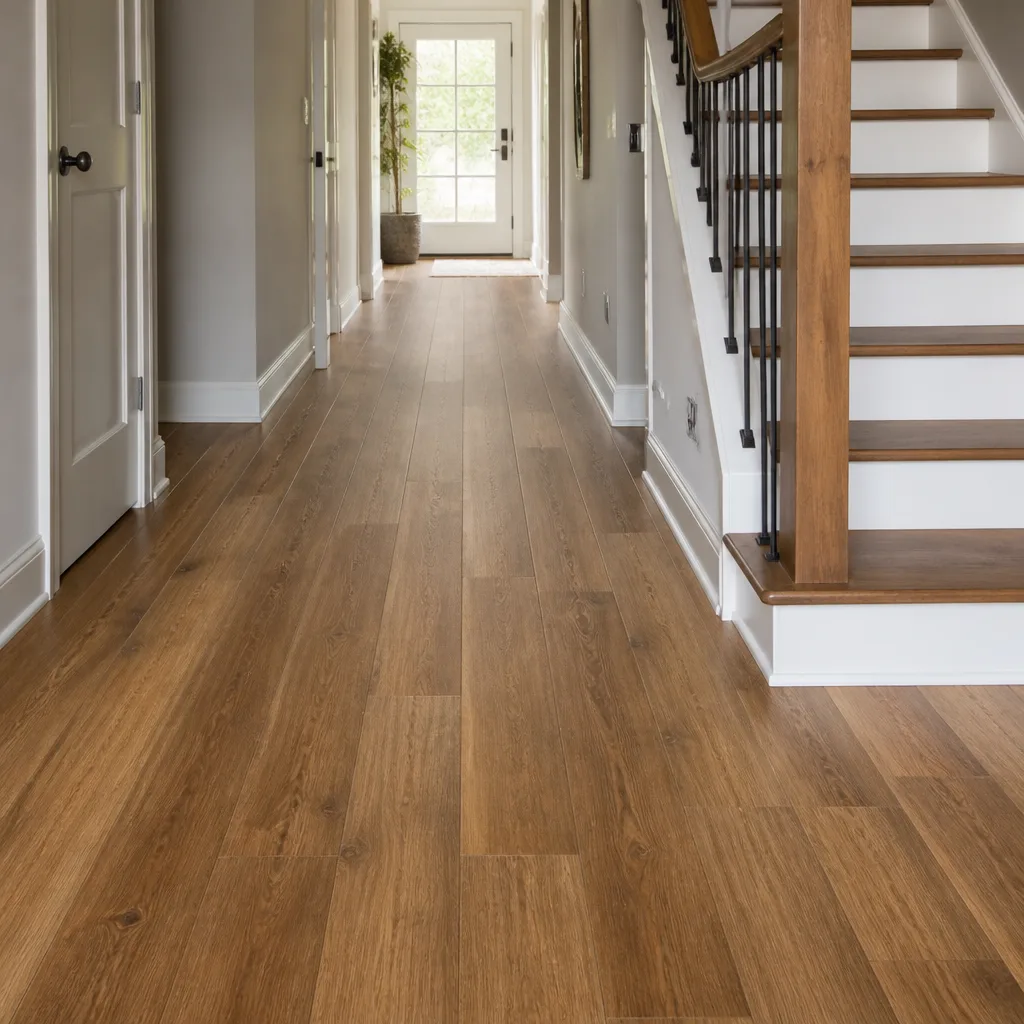 Mohawk
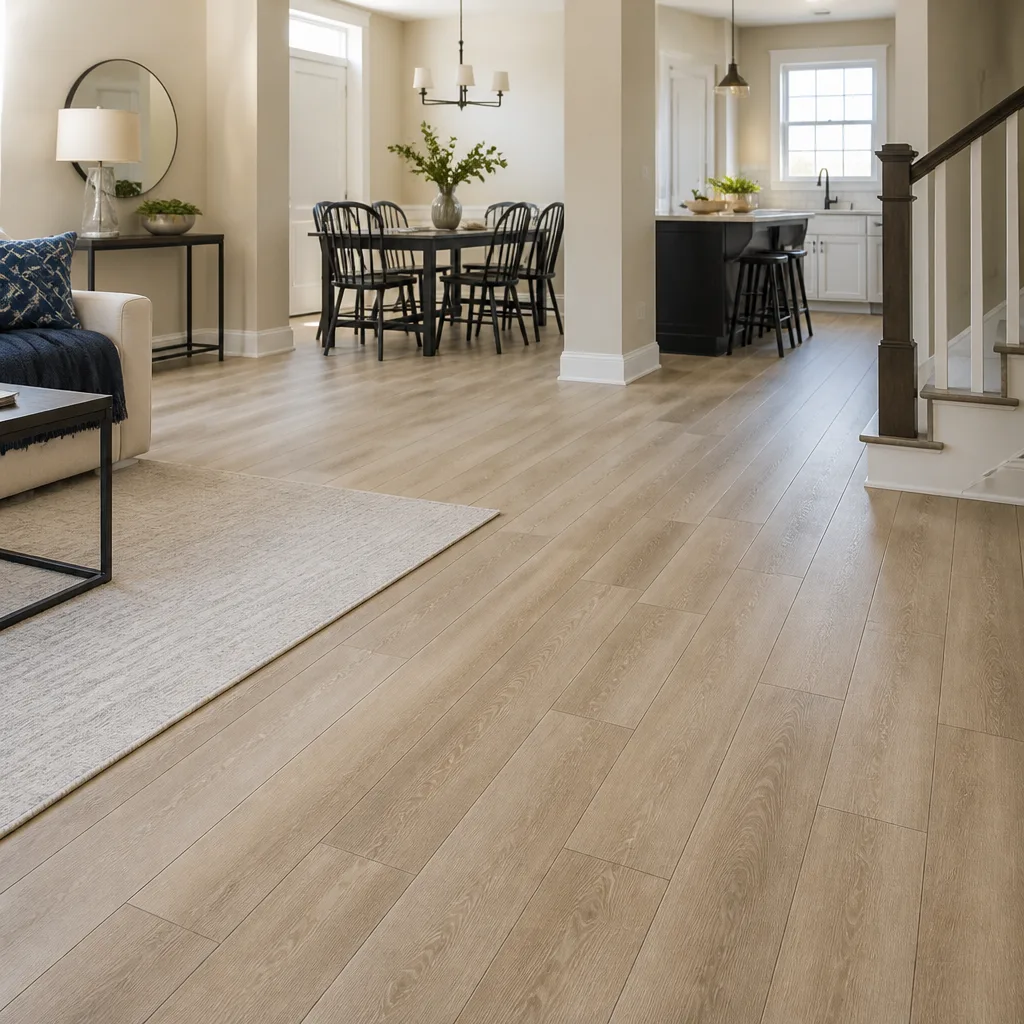 COREtec
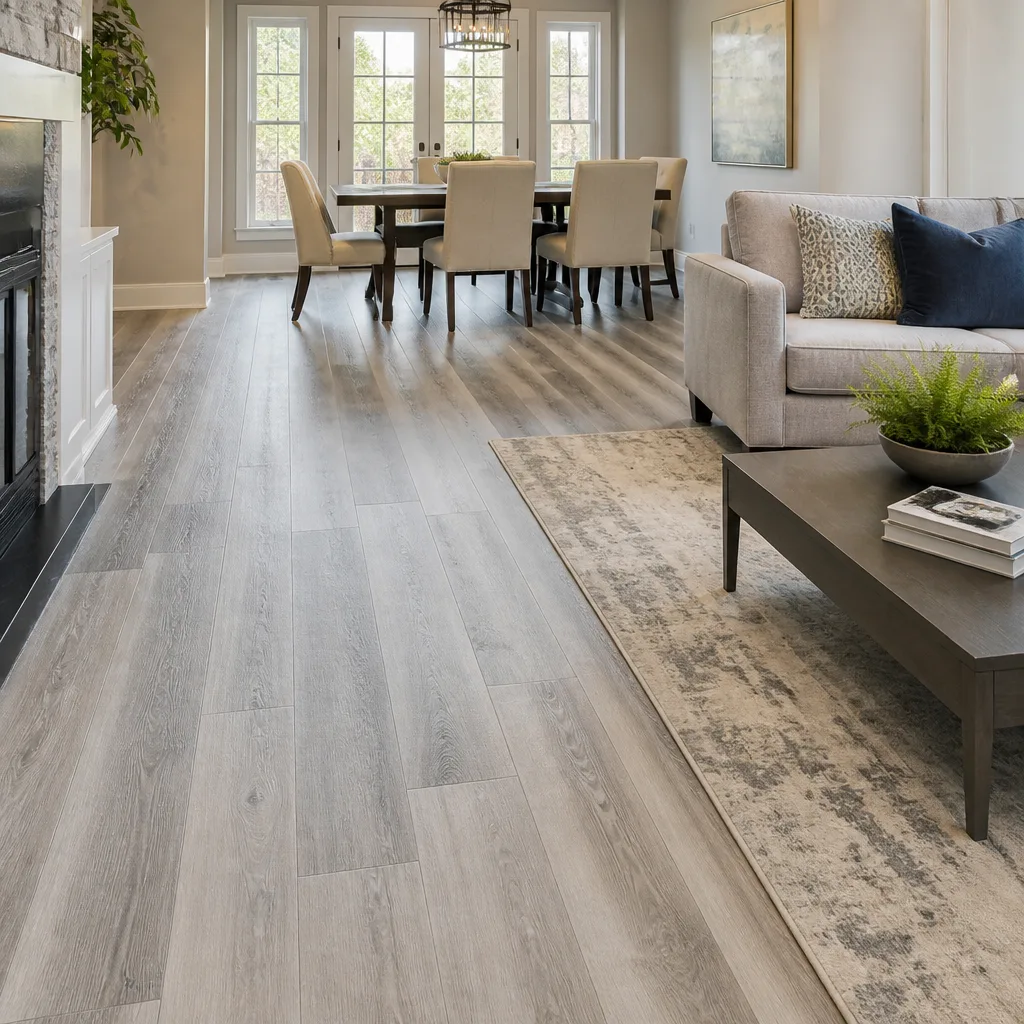 Pergo
Free in-home measure and written estimate: Shaw, Mohawk, COREtec and Pergo lines compared on your own rooms, with carpet, tile, vinyl plank, laminate and hardwood laid out side by side
Get your free estimateThe Complete Guide to Flooring in Sunrise Manor
Most flooring guides are written as if homes float in a climate-controlled vacuum. They aren’t. In Sunrise Manor, almost every house sits on a concrete slab, and that single fact quietly rules out or complicates several popular flooring choices before you even walk into a store. Add summer heat that pushes past 110°F and indoor-outdoor temperature swings that pull materials in two directions, and the floor you pick has to earn its place twice: once on looks, once on how it holds up on a desert slab. This guide maps every major decision to those local realities, from where moisture vapor comes from to how to sequence a whole-home project so the transitions actually line up. You’ll finish knowing which categories fit Sunrise Manor, which need extra prep, and what to ask before anyone orders a box.
Quick Answer
The right floor for a Sunrise Manor home starts with the slab. On concrete-on-grade construction, tile, luxury vinyl plank, and glue-down options usually handle desert conditions best, while solid hardwood and standard laminate need careful moisture control or a different approach. Carpet still works well in bedrooms and living rooms when the pad and installation are right. Match the material to the room, plan for expansion gaps with the heat, and get a written estimate that states how the slab will be prepared before anything gets installed.
Styles & brands we work with
- Hardwood
- Engineered hardwood
- Luxury vinyl plank
- Laminate
- Porcelain tile
- Carpet
- Shaw
- Mohawk
- COREtec
- Pergo
Table of Contents
- Why Slab-on-Grade Construction Changes Everything
- How 110°F Summers Affect Adhesive and Click-Lock Floors
- A Category-by-Category Breakdown for Sunrise Manor Homes
- Flooring Specialist vs. General Contractor
- How to Sequence a Multi-Room Flooring Project
- How to Choose the Right Floor for How You Actually Live
- What a Free In-Home Estimate Should Cover
- Common Mistakes to Avoid
Why Slab-on-Grade Construction Changes Everything
Sunrise Manor homes overwhelmingly sit directly on a concrete slab poured at grade. That means there’s no crawl space and no basement between your floor and the ground. Concrete is porous, and moisture moves through it as vapor, always traveling from wetter to drier, warmer to cooler. In a desert, that direction reverses with the season. Vapor can push up from below in the cool months and get trapped under an impermeable floor covering. When a slab is sealed at the top by a floor that blocks moisture, the vapor has nowhere to go, and it collects. That’s why slab prep isn’t a formality here. It’s the difference between a floor that stays flat and one that cups, bubbles, or lifts.
What this means in practice:
- Vapor barriers matter. Most floating floors, and many glued floors, need a moisture barrier over concrete. Ask what barrier goes down and how it will be seamed.
- Moisture testing comes first. A proper estimate visits the slab and checks it. No reputable installer should skip this on concrete.
- Subfloor prep is its own line. Grinding high spots, filling cracks, and leveling dips are normal steps on a slab and should appear in the written estimate, not show up later as a surprise.
- Solid hardwood is complicated. Nailing a solid wood floor to a slab isn’t possible without a plywood sleeper system, which adds height and cost. Engineered and floating options usually make more sense here.
We’ve seen the alternative play out when vapor control gets skipped: a floor that looks fine for a season and then starts telling on itself. In Sunrise Manor, where the ground stays hot and dry near the surface but carries moisture deeper, that’s a real risk. Prep work is the least glamorous part of any job and the most important one.
How 110°F Summers Affect Adhesive and Click-Lock Floors
Sunrise Manor summers routinely push past 110°F, and the desert air is dry. Your indoor temperature stays much cooler, but the gap between inside and outside is enormous, and the materials at the edges of your rooms deal with it daily. Wood, laminate, and even luxury vinyl expand and contract with heat and humidity changes. A wood floor installed tight to a wall in January can buckle against that same wall in July. That’s why expansion gaps aren’t optional. They’re a working part of the install.
Where the heat matters most:
- Adhesive-based installs. Glue has a working temperature range. On a hot slab in summer, adhesive can skin over too fast or fail to bond cleanly. Installers need to watch slab temperature, not just air temperature, and account for it in scheduling.
- Click-lock floating floors. These rely on room to move. Leave too little and the floor tents at a doorway; leave too much and the trim won’t cover it. Sunrise Manor installers who know the climate plan the gaps correctly from the start.
- Acclimation. Materials need to adjust to the home before install. How long depends on the product, the home, and the manufacturer’s instructions, so ask what your specific flooring requires rather than assuming a single rule.
- Direct sun exposure. Big west-facing windows in a Sunrise Manor living room can heat a floor surface well beyond the air temperature. UV and heat both stress certain finishes over time.
None of this is a reason to avoid a particular floor. It’s a reason to install it with the local climate in mind. The right gap, the right adhesive, and the right acclimation window are all things a flooring specialist factors in by default.
A Category-by-Category Breakdown for Sunrise Manor Homes
Sunrise Manor’s housing stock runs from older ranch homes with tight room layouts to newer construction with open living areas. Each category below fits some rooms better than others. Here’s how they stack up on a desert slab:
Carpet
Best for bedrooms, closets, and living rooms where comfort and sound matter more than water resistance. Shaw and Mohawk carpet lines cover a wide range of styles and durability levels, and the right pad does as much work as the carpet itself. On a slab, carpet usually needs a moisture barrier and a vapor-appropriate underlayment. Good carpet installation includes proper stretching and seaming, which is where cheap jobs fail first.
Tile
Tile handles heat, moisture, and daily traffic better than almost anything. Ceramic and porcelain tile, including Daltile lines, hold up well in kitchens, bathrooms, hallways, and entryways. The slab beneath has to be flat and stable, and the setting materials have to be right for concrete. Tile also solves the vapor problem neatly because it bonds to the slab and doesn’t trap moisture the way a floating floor can. It’s the most forgiving choice for a Sunrise Manor kitchen for exactly that reason.
Hardwood
Solid hardwood on a slab means a sleeper system, which adds cost and floor height. Engineered hardwood handles the slab better and is a common choice in this market. But hardwood’s real advantage in an existing Sunrise Manor home is this: you might not need to replace it at all. Refinished, not replaced is often the smarter call. Hardwood refinishing restores an existing floor and extends its life without the cost of a full tear-out, provided the wood is thick enough and in sound condition. Whether a given floor can be refinished depends on its thickness and condition, checked at the estimate visit.
Luxury Vinyl Plank (LVP)
LVP is one of the fastest-growing categories here, and for good reason. It’s water-resistant, handles temperature swings well, and works over a slab with the right barrier. COREtec and LifeProof both offer options suited to durability-first buyers, while Karndean leans toward design-forward looks. Water-resistant doesn’t mean waterproof, though. Standing water and moisture from below still have to be dealt with, and a slab barrier remains part of the job.
Laminate
Laminate, including Pergo lines, gives you a hard surface at a practical price, and modern click-lock versions handle floating installs well. On a slab, laminate needs a vapor barrier and proper expansion gaps, or heat and trapped moisture will find the seams. It’s a strong choice for bedrooms and family rooms where a hard surface is preferred over carpet. Just plan for the humidity and vapor control up front.
Flooring Specialist vs. General Contractor
Homeowners in Sunrise Manor often start by pricing out a big-box store or a general contractor who “also does floors.” It’s worth understanding what changes when you work with a flooring-only specialist instead. A general contractor spreads attention across many trades. Flooring is one line among many. A flooring specialist thinks about slab moisture, expansion gaps, and product matching every working day. That focus shows up in three places:
- Product sourcing. A specialist carries or sources brand-name flooring, like Shaw, Mohawk, and Daltile, so you’re choosing from recognized, verifiable products rather than an unfamiliar house brand. When you name a brand, you can research it before you commit. We’re a flooring-only business, so the product recommendation is driven by your needs, not by clearing inventory.
- Installation craft. Carpet, tile, and hardwood each have their own skills. A crew that does all three well is different from a crew rotating through trades. At our end of the business, carpet installation, tile flooring installation, and hardwood refinishing are handled by technicians who focus on those disciplines. Our technicians have up to 14 years of experience.
- Accountability. When the only thing a company does is flooring, the job is the whole conversation. Ask any installer how they handle a slab moisture problem or a doorway height difference, and their answer tells you whether flooring is the point or an afterthought.
The brand portfolio works in the customer’s favor: nine brands, one installer, zero guesswork. You get in informed product guidance and expert installation in the same conversation.
How to Sequence a Multi-Room Flooring Project
A whole-home flooring project fails on transitions more often than on product choice. Doorways, thresholds, and floor height differences between rooms are where good plans come apart. Sequence the project right and you handle those details as you go instead of retrofitting a fix. Here’s the order that works:
- Map the whole home first. Walk every room and note what stays, what goes, and where floors meet at doorways. Plan transitions before any material is ordered.
- Decide the highest floor first. Tile with mortar builds up more height than LVP or carpet. If you’re using tile in a hallway that meets a bedroom carpet, plan the transition strip and height difference now.
- Strip and prep the slab. Remove old flooring, run moisture checks, and do subfloor prep on the whole job before any new material goes down. Prepping once, across all rooms, beats prepping room by room.
- Install the dry, hard floors first. Tile and LVP usually go down before carpet, so carpet edges and seams finish cleanly against finished surfaces.
- Save carpet for last. Carpet installers want finished, dust-free surroundings so the new carpet doesn’t collect debris from other work.
- Close out transitions and trim. Thresholds, baseboards, and shoe molding finish the job and make each room feel intentional rather than pieced together.
In Sunrise Manor’s open layouts, the living-room-to-kitchen transition is the one most worth planning early. A mismatched floor height there gets noticed every day afterward.
How to Choose the Right Floor for How You Actually Live
Start with function, not the showroom. The floor that photographs beautifully in a design catalog may not be the one that fits a household with pets, kids, and a habit of tracking in desert dust. Ask these questions in order:
- Which rooms get wet? Kitchens, bathrooms, and laundry areas want tile or water-resistant LVP. Bedrooms and living rooms can take carpet or hardwood.
- How much traffic? Entryways and hallways take the most wear. Tile or durable LVP earns its keep there.
- What’s under the floor? If the existing slab is sound and dry, most categories are open. If it’s cracked or uneven, prep cost enters the equation. This is why the estimate visit matters before you fall in love with a product.
- What’s the budget shape? Think in ranges rather than an exact number. The written estimate sets the final price. A typical Sunrise Manor project is priced per job once the measurements and slab condition are known.
- Do you want to keep an existing floor? If there’s hardwood underneath that’s in decent shape, refinishing may save you from a full replacement and restore the look without new material.
Once those answers are set, the product conversation gets much easier. Nine brand-name lines give us range across carpet, tile, and hardwood, and the right material is usually available once the constraints are clear. That’s the point of working with a specialist: you’re choosing from what fits your home, not from what’s left on a palette.
What a Free In-Home Estimate Should Cover
A free estimate is the point where a flooring project gets real. It should include a walkthrough, measurements, and a look at the slab. Anything that stops short of that isn’t really an estimate. Here’s what a useful one covers:
- Measurements and room-by-room notes. Not just square footage, but the shape of each room and where transitions fall.
- Slab condition and moisture check. Concrete on grade needs to be looked at, not assumed. Bring up moisture testing directly and see how the estimator answers.
- Product options. A specialist should present real brand-name options across categories, with the tradeoffs explained, not a single line pushed at you.
- Prep scope. Grinding, filling, and leveling are normal on a slab. They should be in the written price, not added later.
- A written estimate. Get the price per job in writing. Verbal quotes drift. A written estimate is what the final bill is measured against, and it’s what you can compare line by line.
For homeowners working through a full renovation, being able to handle carpet and tile in the same project, with one source for measured estimates, saves a lot of coordination. If you’re planning a refresh and want tile flooring installation quoted alongside carpet or hardwood work, ask for it all in one visit. Estimates are free, and there’s no obligation to book the job.
Common Mistakes to Avoid
- Skipping the slab moisture check. Concrete on grade passes vapor, and a floor that traps it will fail. Ask for the check and be wary of anyone who waves it off.
- Installing tight with no expansion gap. In Sunrise Manor’s heat, a floor with no room to move will buckle. Make sure the installer plans gaps for every room.
- Mixing floor heights without a transition plan. Tile and carpet sit at different levels. If you don’t plan the transition, you’ll be looking at a tripping hazard every day.
- Choosing a floor for looks over lifestyle. A beautiful hardwood in a laundry room or a soft carpet in a busy hallway will show wear. Match the material to the room.
- Accepting a verbal quote. A price you can’t see in writing is a price that can change. Insist on a written estimate before you commit.
- Replacing hardwood that could be refinished. A sound, thick-enough floor can often be brought back rather than torn out. Have it checked before you decide.
- Letting a general contractor set the flooring scope. Flooring has its own prep, transitions, and product knowledge. A flooring specialist keeps that detail in focus.
See the difference
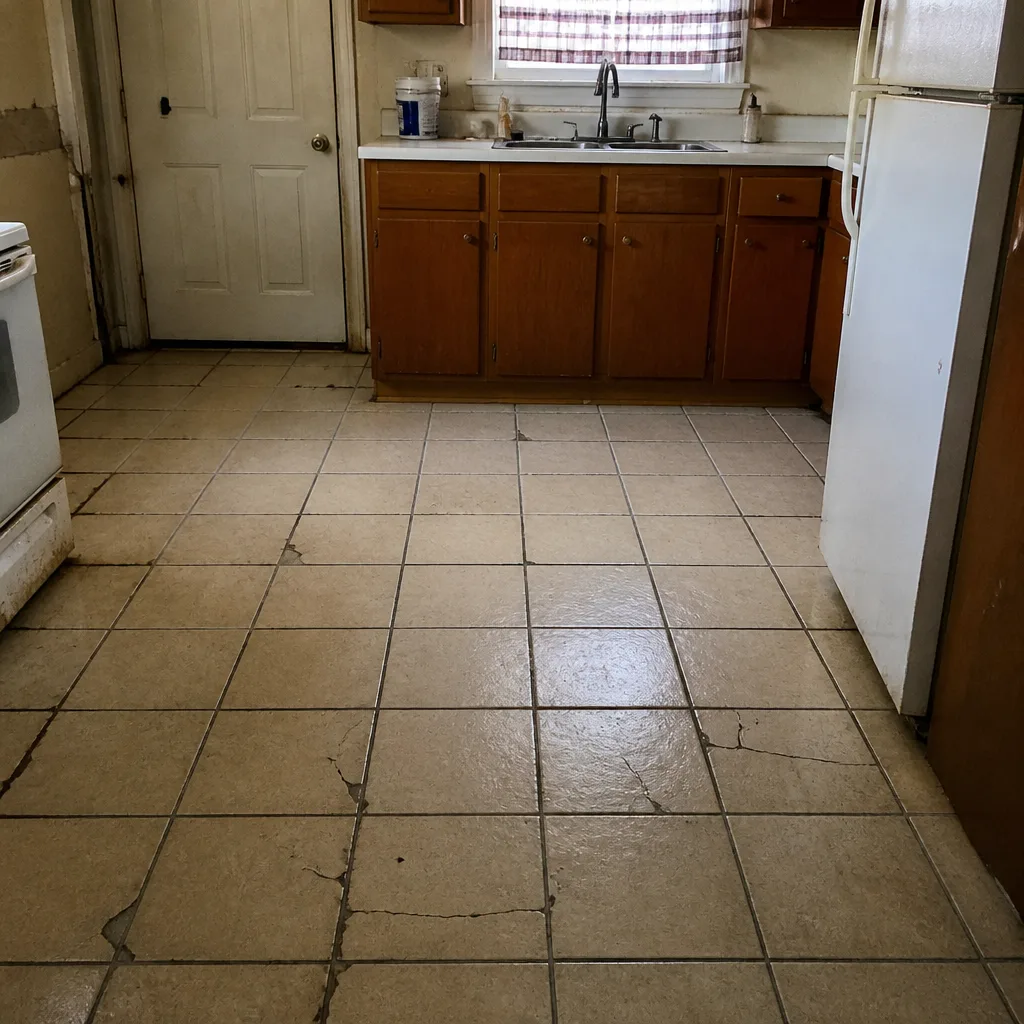 Before
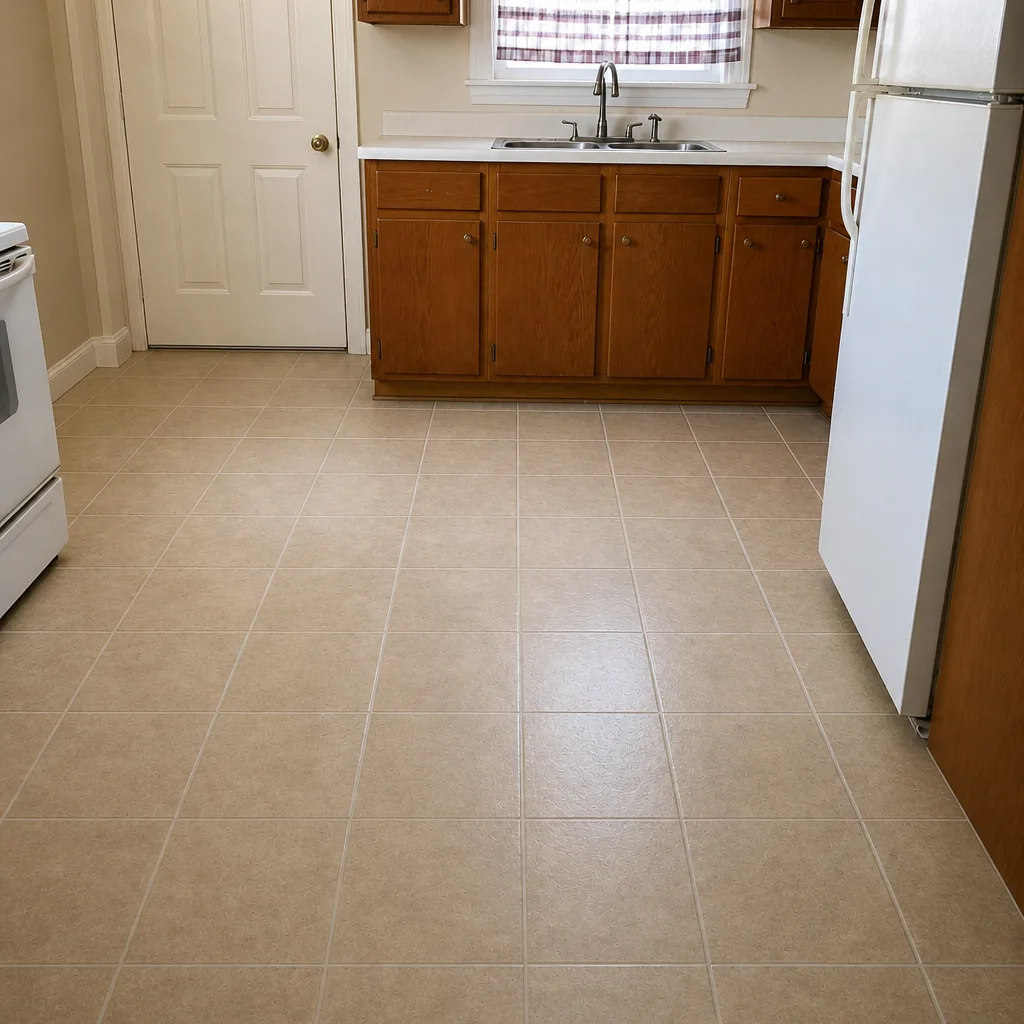 After
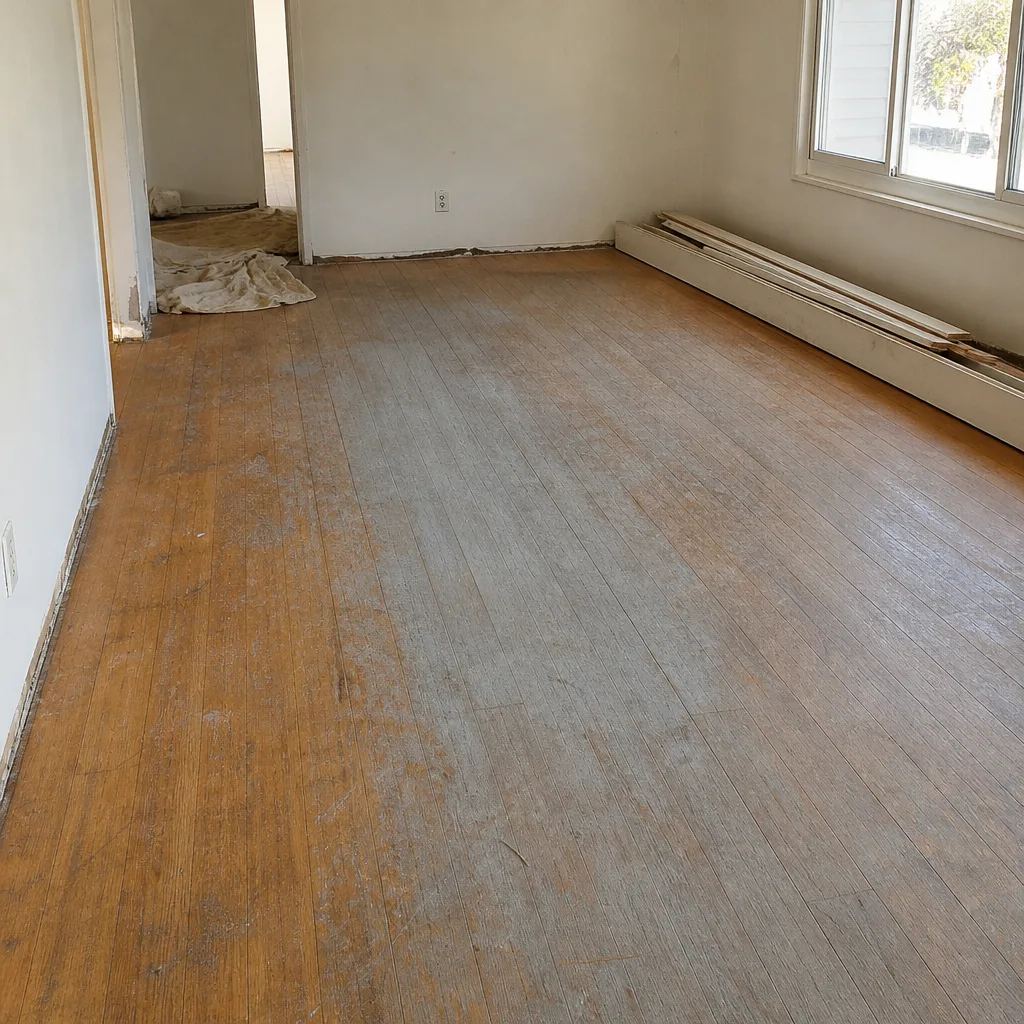 Before
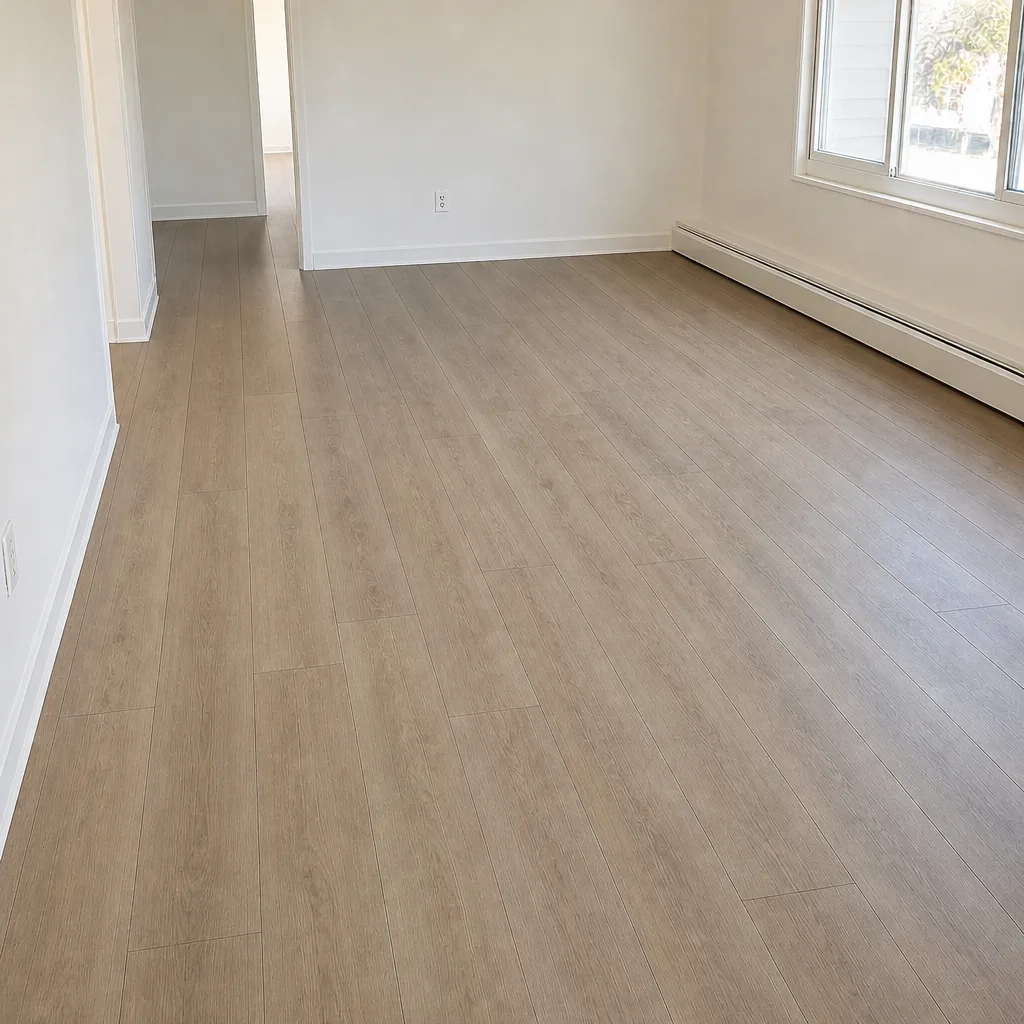 After
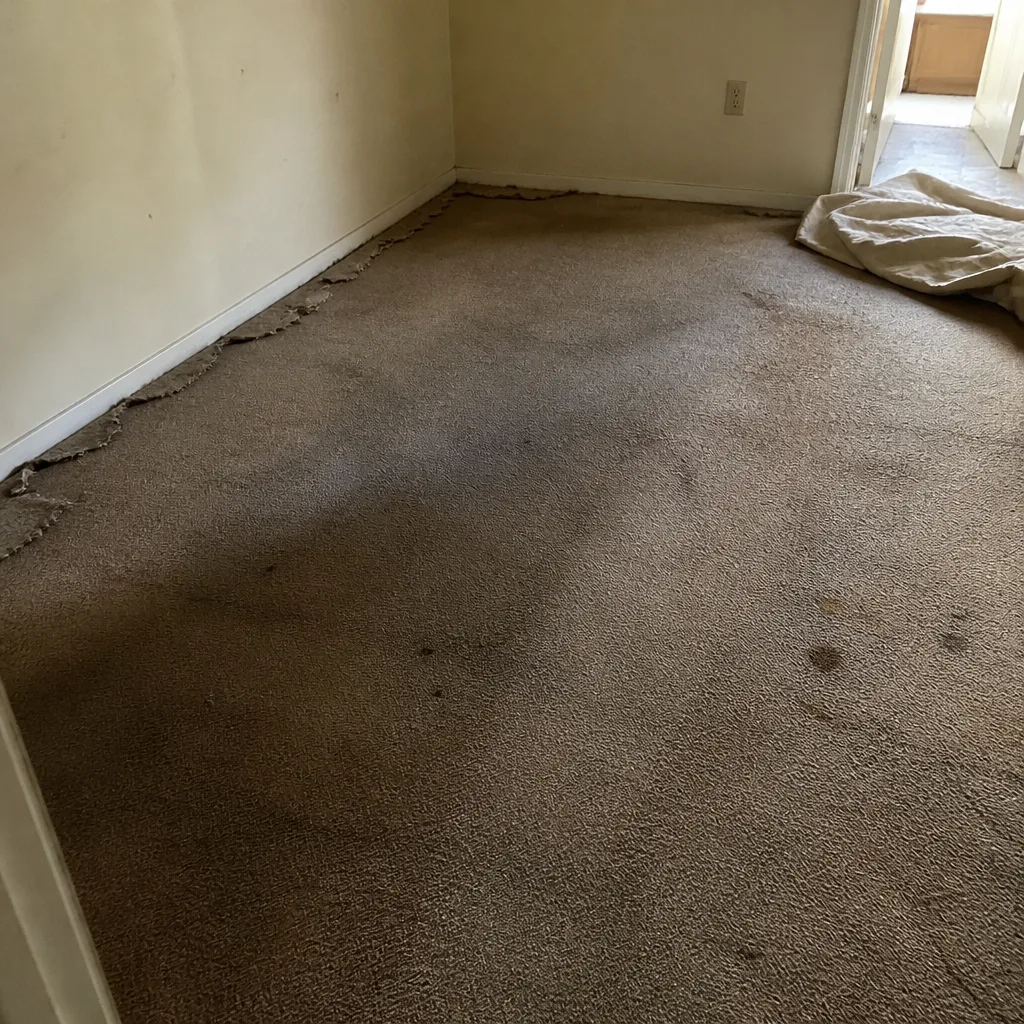 Before
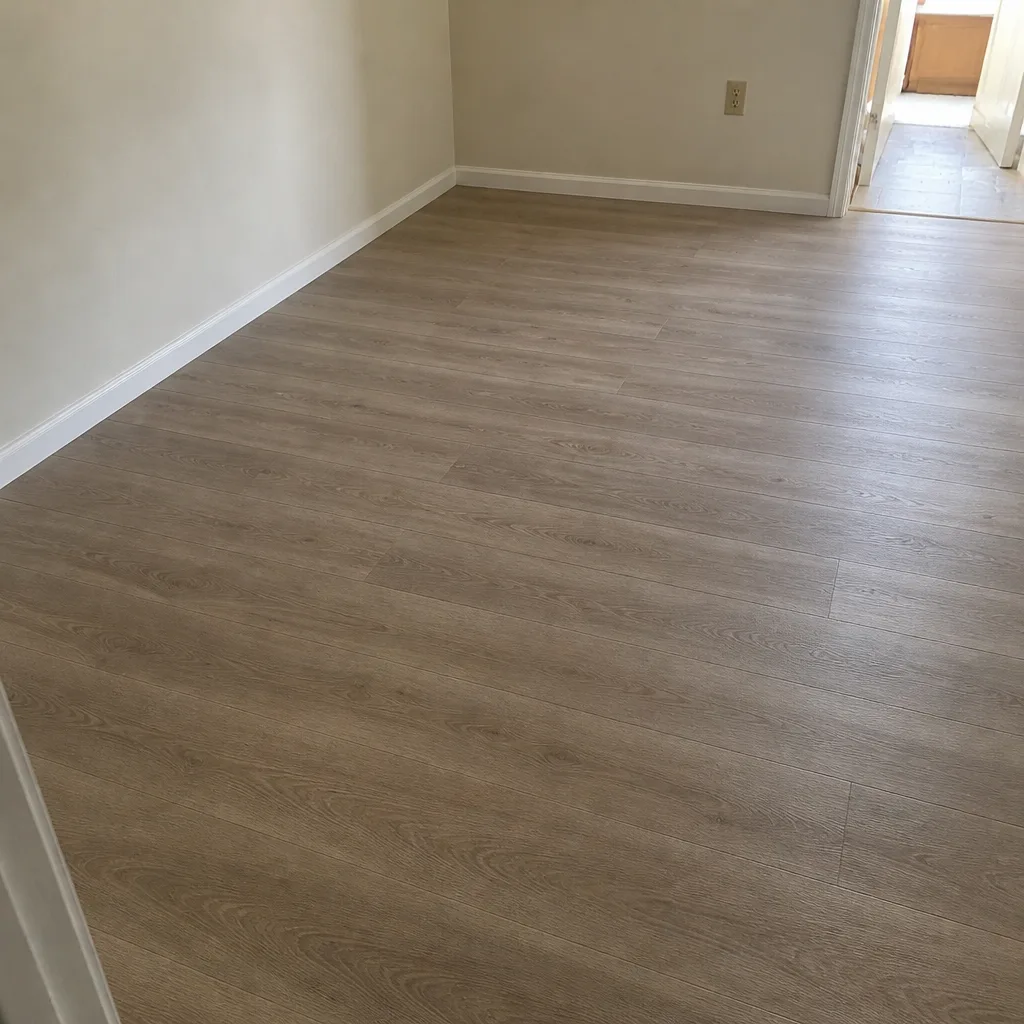 After
When to Call a Professional
Some flooring work is clearly a professional’s job. Slab prep, moisture mitigation, tile setting, carpet stretching, and hardwood refinishing all involve tools and techniques that go wrong quietly at home. If your floor is cupping, bubbling, or lifting at the seams, that’s a call-a-professional signal, because the fix usually starts with the slab, not the surface. If you’re planning a whole-home project with mixed materials and transitions, or you’re not sure whether an existing hardwood can be refinished, get a measured opinion before ordering anything. And if you’re comparing big-box installation with a flooring specialist, the estimate visit is where the difference becomes clear. Flooring Installation Sunrise Manor offers free estimates in Sunrise Manor. Call (855) 799-4650. We answer 24/7. Fast dispatch from 7am to 7pm, Sunday through Friday.
Frequently Asked Questions
Tile and luxury vinyl plank are usually the most forgiving choices on a concrete slab, because they handle moisture and heat swings well with the right prep and barrier. Carpet works well in bedrooms and living rooms when the pad and underlayment are right. The best choice still depends on the room and how you use it, so get the slab checked before deciding.
Usually yes, especially for floating floors and many glued floors. Concrete on grade passes moisture vapor, and a floor that seals the slab can trap that vapor underneath. Ask your installer what barrier will be used and how it will be seamed. Call (855) 799-4650 for an exact quote. Estimates are free.
Solid hardwood over concrete usually requires a plywood sleeper system, which adds height and cost. Engineered hardwood often makes more sense on a slab. If you already have hardwood in place, refinishing may be the better option, since it restores the floor you have without a full replacement.
Yes, mainly through expansion and contraction. Sunrise Manor summers push past 110°F, and the swing between outdoor and indoor temperatures makes materials move at the edges of each room. Proper expansion gaps, correct adhesives, and sensible acclimation keep the floor stable. A flooring specialist plans for this from the start.
The schedule depends on the product, the square footage, and how much slab prep is needed. Some jobs finish in a couple of days, while whole-home projects with tile, carpet, and transitions take longer. The timeline is set at the estimate, so you’ll know what to plan around before you commit.
Yes, the estimate is free. A useful one includes measurements, a look at the slab, product options across categories, and a written price per job. The written estimate sets the final price, so there are no verbal surprises later. Call (855) 799-4650 to schedule yours. We answer 24/7. Fast dispatch from 7am to 7pm, Sunday through Friday.
The Bottom Line
Flooring in Sunrise Manor comes down to a few local facts: slab-on-grade construction, moisture vapor that has to be managed, and heat that makes every material move. Choose the category by room and lifestyle first, plan the transitions before you order, and insist on slab prep and a written estimate. Whether you’re looking at carpet, tile, hardwood, LVP, or laminate, the brand-name options are there. What makes the difference is a flooring specialist who installs with the desert climate in mind. Start with the right floor for your home, then get it measured and quoted. Call (855) 799-4650 for a free estimate and expert guidance.
Flooring Installation Sunrise Manor works with nine brand-name flooring lines and specializes in carpet installation, tile flooring installation, and hardwood floor refinishing. If you’re planning a project in Sunrise Manor, reach out to our Flooring Installation Sunrise Manor team to get the conversation started.
Written by the team at Flooring Installation Sunrise Manor.