
Last updated November 18, 2026
 Hardwood
 Engineered hardwood
 Luxury vinyl plank
 Laminate
 Porcelain tile
 Carpet
 Shaw
 Mohawk
 COREtec
 Pergo
Free in-home measure and written estimate: Shaw, Mohawk, COREtec and Pergo lines compared on your own rooms, with carpet, tile, vinyl plank, laminate and hardwood laid out side by side
Get your free estimateHow to Hire a Flooring Contractor in Sunrise Manor: A Step-by-Step Guide
Nevada requires a C-16 floor covering contractor license for the work you’re about to pay for. Most homeowners getting bids in Sunrise Manor have never asked to see one. That silence is exactly what an unlicensed operator counts on, because it costs nothing to print a business card and everything to walk away from a floor that fails six months after the invoice clears. The license check takes two minutes. The consequences of skipping it can follow you for years. This guide walks you through the vetting process step by step: how to verify licensing, how to read a bid critically, what contract language to insist on, and how to compare apples to apples when two proposals name what sounds like the same floor.
Quick Answer
To hire a flooring contractor in Sunrise Manor, verify the contractor holds an active C-16 floor covering license with the Nevada State Contractors Board, get at least two written bids with itemized scope, confirm who supplies materials and who handles subfloor prep, and never pay a large cash deposit up front. A legitimate flooring specialist will hand over license information and a written scope without hesitation. A generalist who subcontracts the flooring out usually can’t tell you who will actually be on your floor.
Styles & brands we work with
- Hardwood
- Engineered hardwood
- Luxury vinyl plank
- Laminate
- Porcelain tile
- Carpet
- Shaw
- Mohawk
- COREtec
- Pergo
Table of Contents
- Why Nevada’s C-16 License Matters More Than You Think
- How Do You Verify a Contractor’s License in Under Two Minutes?
- Flooring Specialist vs. General Contractor: Who’s Actually Accountable?
- How to Read a Flooring Bid Without Getting Fooled
- The Contract Language You Should Require
- How to Compare Bids That Name Different Products
- Red Flags Experienced Homeowners Spot First
- What Sunrise Manor Climate and Housing Mean for Your Floor
Why Nevada’s C-16 License Matters More Than You Think
Nevada classifies floor covering as a specialty trade, and the C-16 license is the specific classification that covers it. That distinction matters because it tells you what the license holder is legally allowed to do. A C-16 floor covering contractor can install carpet, tile, vinyl, laminate, and hardwood, and can refinish existing wood floors. A general contractor’s license, by contrast, covers broad construction and typically lets the holder subcontract specialty work to others. Those are two very different arrangements, and only one of them puts the person who quoted you face to face with the person who actually lays your floor.
Unlicensed flooring work isn’t rare in the Las Vegas Valley. It happens for a simple reason: flooring is one of the last trades a homeowner hires during a renovation, and by that point budgets are tight and patience is thinner. A cash price that undercuts the licensed bids by a meaningful margin is easy to accept. What’s harder to accept down the road is an unenforceable warranty, a failed installation with no one to call, and no recourse through the state board because there was never a license to complain about.
If you hire a licensed contractor and something goes wrong, you have a formal complaint process through the Nevada State Contractors Board. If you hire an unlicensed one, your options are a civil suit or nothing. We’ve watched homeowners in Sunrise Manor discover this distinction only after a bad install, which is why we recommend making the license question the very first item on your list. Ask before you talk product. Ask before you talk price. If the answer is vague, the conversation is over.
How Do You Verify a Contractor’s License in Under Two Minutes?
The fastest way to check any flooring contractor’s standing in Nevada is the Nevada State Contractors Board’s online license lookup. It’s free, it’s public, and it takes less time than a phone call. Here’s the sequence.
- Ask for the license number. Get the actual number, not just the word “licensed.” A legitimate contractor will provide it in writing.
- Look it up on the Nevada State Contractors Board website. The lookup tool shows license status, classification, expiration date, and whether there are any disciplinary actions on record.
- Confirm the classification is C-16. A general contractor’s license or a different specialty classification doesn’t automatically cover the flooring work you’re hiring for.
- Check the expiration date. An expired license is effectively no license. Verify the date is current.
- Look for disciplinary history. The board’s records show past complaints and actions. This is public information and worth reading before you sign anything.
Nevada also requires licensed contractors to carry a state contractor’s bond as a condition of licensure. That bond is what gives homeowners a recovery path if a licensed contractor fails to complete work or causes damage. Unlicensed operators have no bond, which means the only person standing behind the work is the person who may or may not answer their phone next month.
Finally, ask for a certificate of insurance. General liability coverage protects your home if something is damaged during installation. Workers’ compensation coverage protects you from liability if a crew member is injured on your property. Verify both, and verify them for the entity actually performing the work, not just the name on the proposal. A contractor who can’t produce these documents promptly is telling you something.
Flooring Specialist vs. General Contractor: Who’s Actually Accountable?
A flooring specialist bids the flooring. A general contractor bids the whole renovation and subcontracts the flooring to someone else. On paper, the general contractor route looks tidier because you have one point of contact for everything. In practice, the accountability structure is different in a way that matters when something goes wrong.
When a flooring specialist quotes your job, the company that quoted you is the company responsible for the installation, the subfloor prep, the material handling, and the warranty. There’s no layer between you and the work. When a general contractor quotes your flooring, the bid typically includes a markup on the subcontractor’s price, and the person who will actually be on your floor may not be known to you until they arrive. If a tile layout is off or a carpet transition sits wrong, you’re moving through the general contractor to resolve it, who then moves through the subcontractor. That’s more steps, not fewer.
There’s a second issue: divided attention. A general contractor is managing framing, electrical, plumbing, drywall, and painting while also scheduling your flooring. Flooring tends to get sequenced last, which means it gets the least scheduling flexibility and the most time pressure. A flooring-only company schedules nothing but flooring, which is why their installers tend to arrive with time and a plan rather than a squeeze.
For a whole-home project, working with a flooring specialist that handles carpet, tile, and hardwood means you’re not coordinating three separate trades for what’s really one scope. If you’re planning a full renovation in Sunrise Manor, we recommend pricing the flooring separately from the general work, even if you hire the general contractor for everything else. The bids are more honest that way, and the accountability is clearer. If you want to compare specialist services directly, start with flooring installation in Sunrise Manor and see what a flooring-only bid actually includes.
How to Read a Flooring Bid Without Getting Fooled
A flooring bid is only useful if it tells you what’s included. Most homeowner complaints about flooring start with a bid that was too vague to catch the problem. Here’s what a proper bid must state explicitly.
- Square footage with a measurement basis. The bid should describe how the area was measured, not just a number. Room-by-room is clearest; a single lump-sum square footage figure is harder to verify.
- Subfloor preparation, described. This is where most disputes originate. A bid that says “prep included” tells you nothing. Ask what prep specifically: leveling, patching, removal of existing material, addressing moisture issues, replacing damaged subfloor. Each of these is a listed line item in a good bid.
- Material supply, itemized. Who supplies what, and under whose name? Materials supplied by the contractor are typically covered by the contractor’s warranty on installation. Materials supplied by you are not.
- Product name and collection. Not just “vinyl plank” or “tile.” The specific brand and product line should appear on the bid. This is the single biggest gap between bids that look comparable and bids that aren’t.
- Removal and disposal. Old flooring removal and haul-away should be itemized separately or clearly included. A bid that doesn’t mention disposal probably doesn’t include it.
- Transitions, trim, and finishing details. Stair nosings, thresholds, baseboard removal and replacement, and closet cuts should all be stated or explicitly excluded.
- Payment schedule. A reasonable schedule ties payments to completed milestones, not to dates. If the bid asks for a large cash deposit up front with no milestone structure, treat that as a serious warning sign.
A bid that provides all of the above is longer and looks more complicated than a one-line lump-sum proposal. That’s the point. The one-line bid is easier to compare on price only, which is exactly why it wins so often. The itemized bid is easier to hold someone to, which is what you actually need. If you’re comparing a carpet installation bid against a tile bid against a hardwood refinishing quote, each one needs its own itemization before you can make a meaningful comparison.
One practical tip: ask for the bid in writing even if the contractor gives you a verbal estimate first. Verbal estimates in Sunrise Manor are common, and they’re not worth much when a dispute arises. A contractor who resists putting a scope in writing before you sign is telling you how they’ll behave after you sign.
The Contract Language You Should Require
Once you’ve selected a contractor, the contract should carry over the specific terms that protect you. Here’s what to require in writing, item by item. A reputable flooring specialist will include most of this without being asked. A contractor who pushes back on any of it is showing you their hand before the work even starts.
- Scope of subfloor preparation. In writing, itemized. What gets leveled, what gets patched, what happens if additional damage is found during installation, and how that change gets priced. The phrase “additional work will be discussed and approved before proceeding” should appear.
- Who supplies the materials. Named on the contract. If the contractor supplies, the material name and product collection should appear. If you supply, state that explicitly and check whether the installation warranty still applies.
- Payment schedule tied to milestones. A reasonable structure spreads payments across milestones: an initial deposit, a payment at material delivery or install start, and a final payment upon completion and your walkthrough approval. Not a single large deposit up front, and not full payment before the work is finished.
- Warranty terms in writing. Two warranties exist: the manufacturer’s product warranty and the installer’s workmanship warranty. Get both in writing. Know what each covers, what voids each, and how long each runs. The manufacturer’s warranty covers the product; the installer’s covers what they did installing it. If the installer is unlicensed, that second warranty is effectively unenforceable.
- Change order process. If the scope changes mid-job, how does the price change? Get the process in writing so a mid-installation surprise doesn’t become an open-ended negotiation.
- Completion date range, not a single date. Installation timelines depend on schedule, material lead time, and site conditions. A range with a clear start and end is more honest than a single promised date.
Read every section. If you don’t understand a clause, ask. A contractor who gets impatient about contract questions before the job is telling you how they’ll handle questions during the job.
How to Compare Bids That Name Different Products
Two bids that both say “luxury vinyl plank” or “ceramic tile” are not comparable. This is where the most expensive mistakes happen, because it’s hidden. One bid might name Mohawk’s luxury vinyl line, another might name COREtec, and a third might just say “waterproof plank” with no product line at all. Those three products are not the same floor, and the prices reflect it, even if the numbers look like an apples-to-apples comparison.
Here’s how to make the bids comparable.
- Demand brand name and product collection on every bid. Not “LVT” or “tile.” The actual brand and the specific collection. A bid that won’t name the product is telling you the product is negotiable, which means it’s whatever is cheapest the day the order goes in.
- Compare warrantied scope, not just numbers. One bid might include a manufacturer’s product warranty on a name-brand floor. Another might use a product with no meaningful warranty. A lower bid with no product warranty isn’t actually lower.
- Match the specification for the room.
- Check what “moisture-resistant” actually means. No floor is waterproof in the sense that standing water and moisture from below won’t damage it. Be skeptical of a bid that uses that language as shorthand, and ask what the product is rated for in a specific room.
- Ask whether the bid is the product you actually want. A premium design-forward vinyl from Karndean and a durability-first line from LifeProof are both good products; they’re different budgets and different goals. A good bid tells you which one your quote uses and why.
The clearest way to compare bids is to ask each contractor to quote the same named product line, then compare installation scope and warranty side by side. If you want a real benchmark for what a specialist bid looks like, our tile flooring installation page walks through what’s typically included in a tile scope, which is the most prep-sensitive trade in the category.
Red Flags Experienced Homeowners Spot First
These are the signals that repeat most often in flooring complaints. Any one of them is a reason to slow down. Two or more is a reason to walk away.
- A lump-sum bid with no itemization. No line items for prep, materials, or removal. If the bid is a single number on a single line, ask for a written breakdown or move on. You cannot hold anyone to a scope that was never described.
- A large cash deposit up front. Legitimate contractors typically structure payments around milestones. A contractor who asks for a large cash deposit before any work begins has your money before they have any accountability.
- No written scope at all. Verbal-only bids are common in the Las Vegas Valley. They also leave you with no record when the work doesn’t match what you remember.
- A refusal to name the product. “We’ll use a good quality carpet” without brand and collection is a way of keeping the product line open until the cheapest option becomes convenient. Name brands appear on good bids.
- No license number, or a vague answer when asked. If the answer is “we’re fully licensed” without a number, ask again. If it’s still vague, treat it as a no.
- A cash-only request with no invoice. Cash-only jobs without a written contract are a way of keeping the job unenforceable. You want a written contract and a payment record.
- Pressure to sign before you’ve compared. “This price is only good today” is a tactic, not a policy. A genuine quote holds for a reasonable period. A flooring specialist wants you to compare, because the comparison works in their favor.
One more flag worth mentioning because it’s specific to flooring: a bid that doesn’t include subfloor prep as a line item. Prep is where installation failures live. A bid that skips it is either a bid that doesn’t do it or a bid that does it off the record and charges you later. Either way, you want it in writing.
What Sunrise Manor Climate and Housing Mean for Your Floor
Sunrise Manor sits in the Las Vegas Valley, which means very dry air most of the year and a lot of dust blowing in during windy stretches. That climate affects flooring selection in ways that are worth thinking through before you choose a product, because it’s easier to pick the right floor once than to replace the wrong one later. Dry air matters for solid and engineered hardwood more than it does for tile or carpet. Wood expands and contracts with humidity changes, and in the valley’s very dry indoor air that movement is continuous. A bid that doesn’t mention indoor humidity considerations for a hardwood floor is incomplete. The good news is that a flooring specialist who knows the local climate will typically steer you toward engineered hardwood or a product suited to the conditions, rather than letting a showroom decision become a seasonal problem.
Tile does well here, because ceramic and porcelain from a manufacturer like Daltile don’t care about humidity. Tile is also easier to keep clean in a dusty environment, which is why so many Sunrise Manor homeowners choose it for the high-traffic rooms. Carpet has one local consideration: fine valley dust settles into pile faster than in a more humid climate, so vacuuming frequency matters more than it would elsewhere, and a better carpet from a name brand with a denser backing tends to hold up longer against that kind of wear. None of this is a reason to avoid carpet; it’s a reason to choose it with the local environment in mind.
Housing matters too. The Sunrise Manor area includes a lot of older housing stock alongside newer construction, and that mix means subfloor conditions vary a lot from home to home. Older homes sometimes have subfloors that need patching or leveling before new flooring goes down; newer construction in the valley can have concrete slabs with different preparation needs. Neither is a surprise, but both are the reason the subfloor prep line on the bid matters. A contractor who hasn’t seen your subfloor doesn’t know what prep you need, which is why a written bid that lists prep explicitly is worth more than a verbal estimate that assumes it away. If you’re not sure what to expect in your specific neighborhood, our Sunrise Manor page gives the local housing context.
Common Mistakes to Avoid
- Comparing bids on price alone. Two bids are only comparable if they name the same product and the same scope. A lower number on a more vague bid is usually the more expensive choice over the life of the floor.
- Skipping the license check because the contractor “seems legit.” The two-minute lookup on the Nevada State Contractors Board site is the only way to know whether there’s a license at all, and what happens if the work fails.
- Letting the general contractor pick the flooring installer without telling you who it is. If the flooring is subcontracted, ask for the name and license number before the crew arrives, and check it the same way you’d check the general contractor.
- Not asking about subfloor prep in writing. “Prep included” is not a scope. Ask what specifically is included and how additional prep gets priced if it’s discovered during installation.
- Accepting a large cash deposit with no milestone schedule. Payment structure is leverage. Keep it in your favor by tying payments to completed work.
- Assuming “waterproof” means water doesn’t matter. Water-resistant products are a real category, but standing water and moisture from below still have to be dealt with. No floor is immune to a hidden leak.
- Skipping the written warranty terms. Manufacturer warranty and installation warranty are two different things. Get both in writing, and understand what voids each.
See the difference
 Before
 After
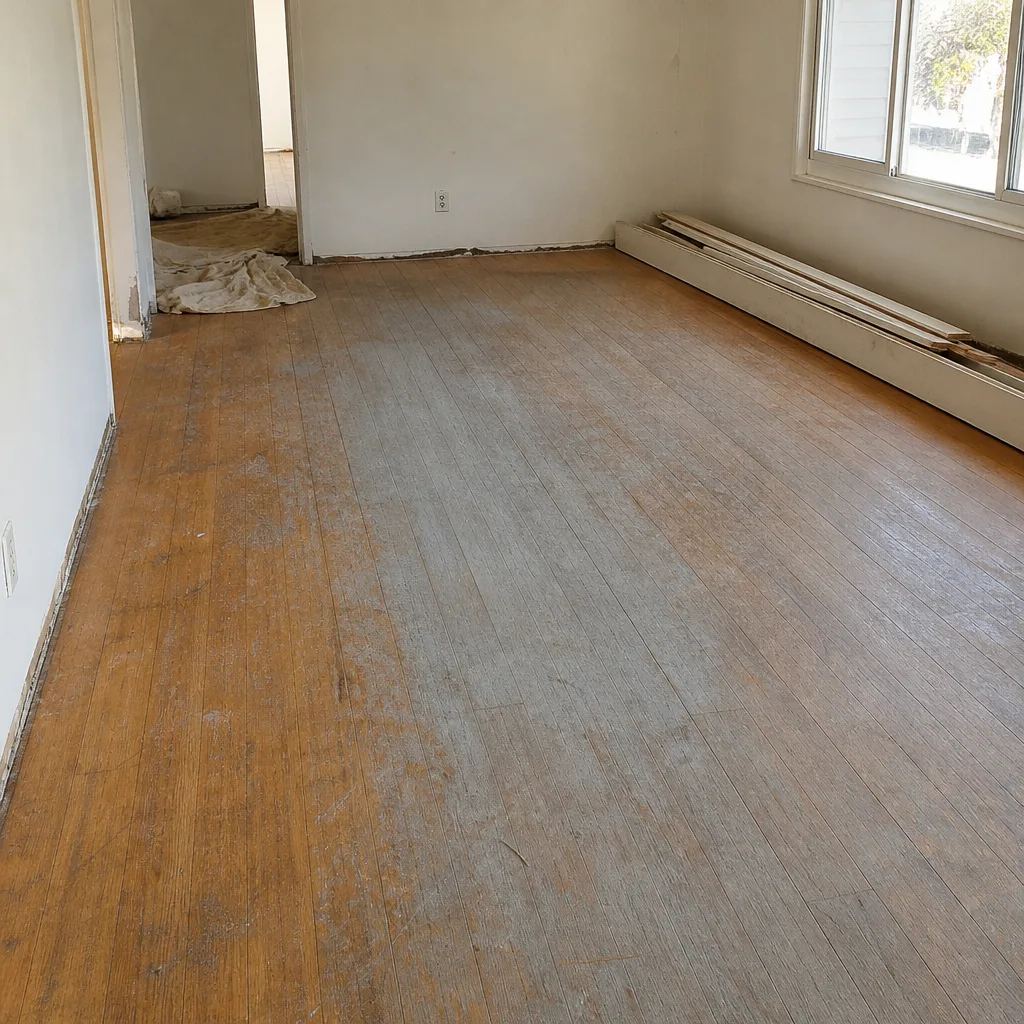 Before
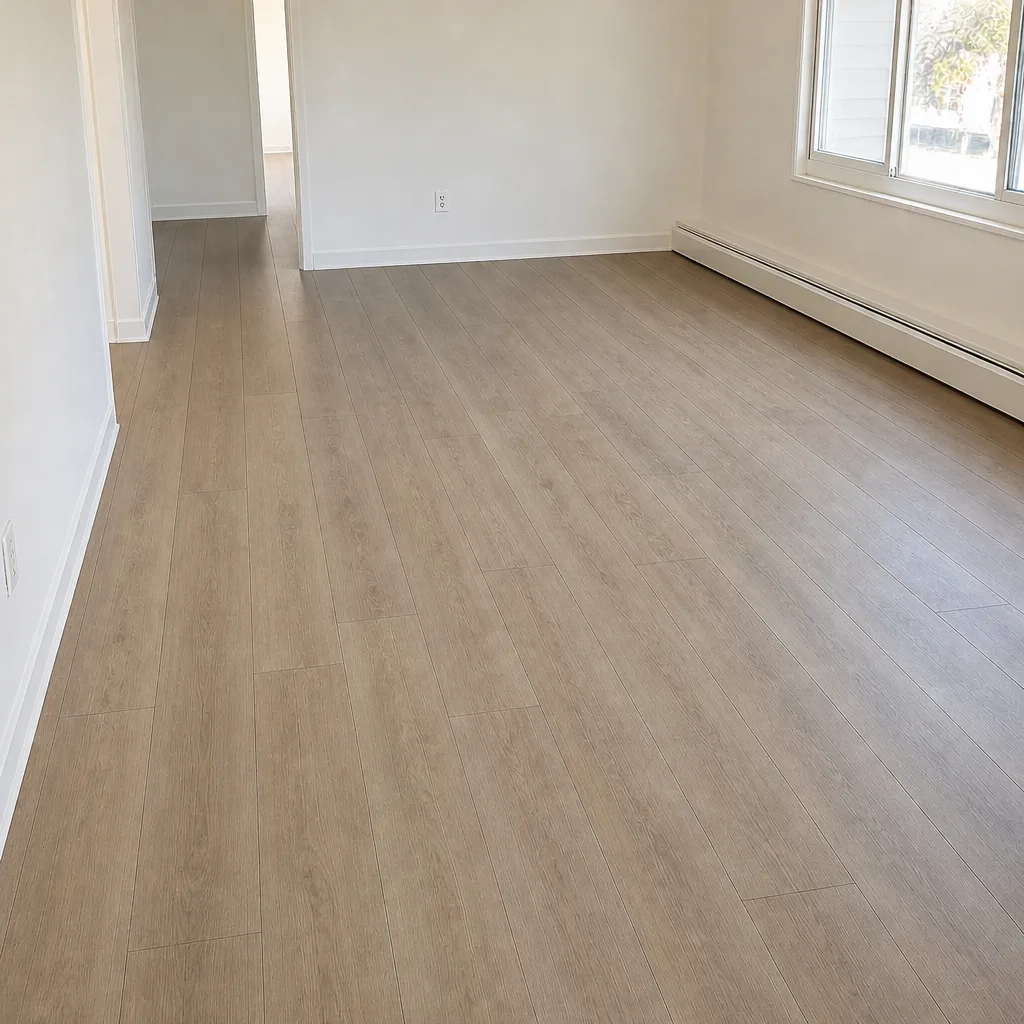 After
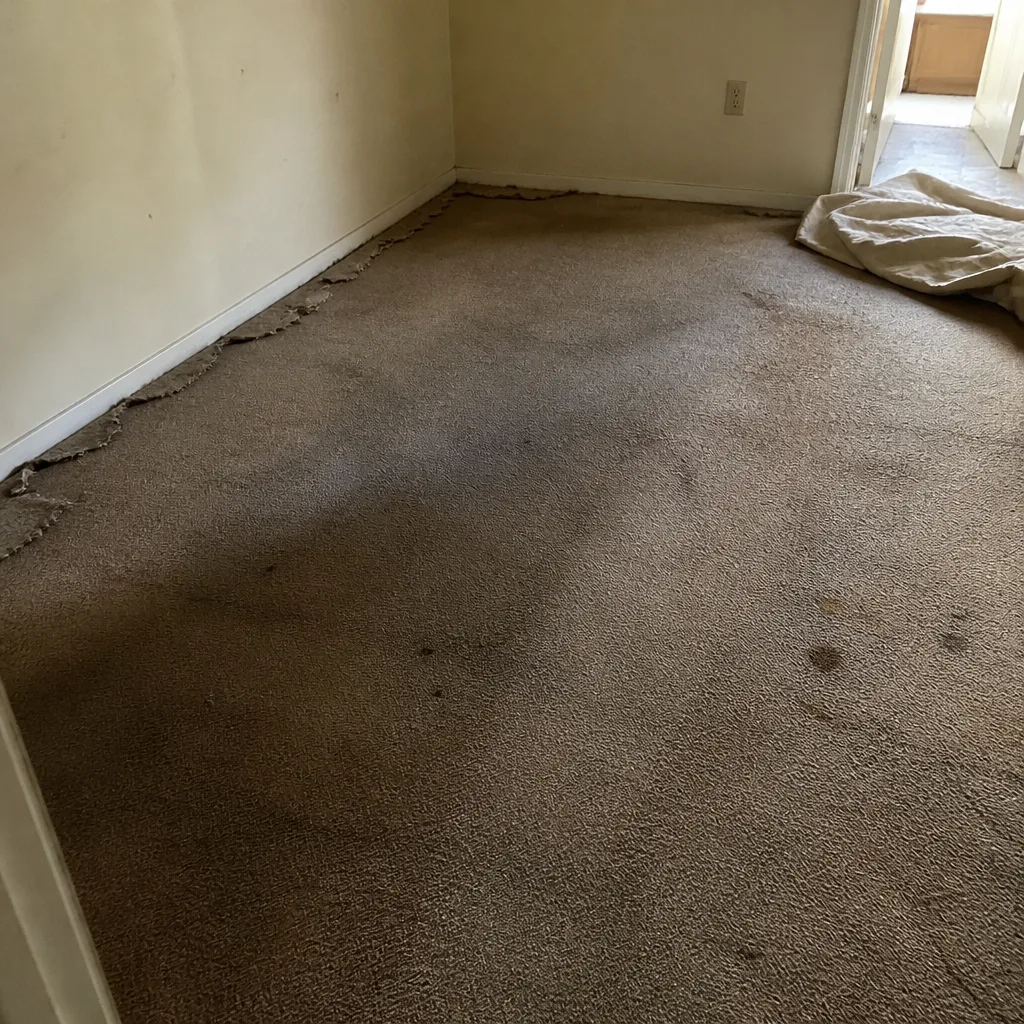 Before
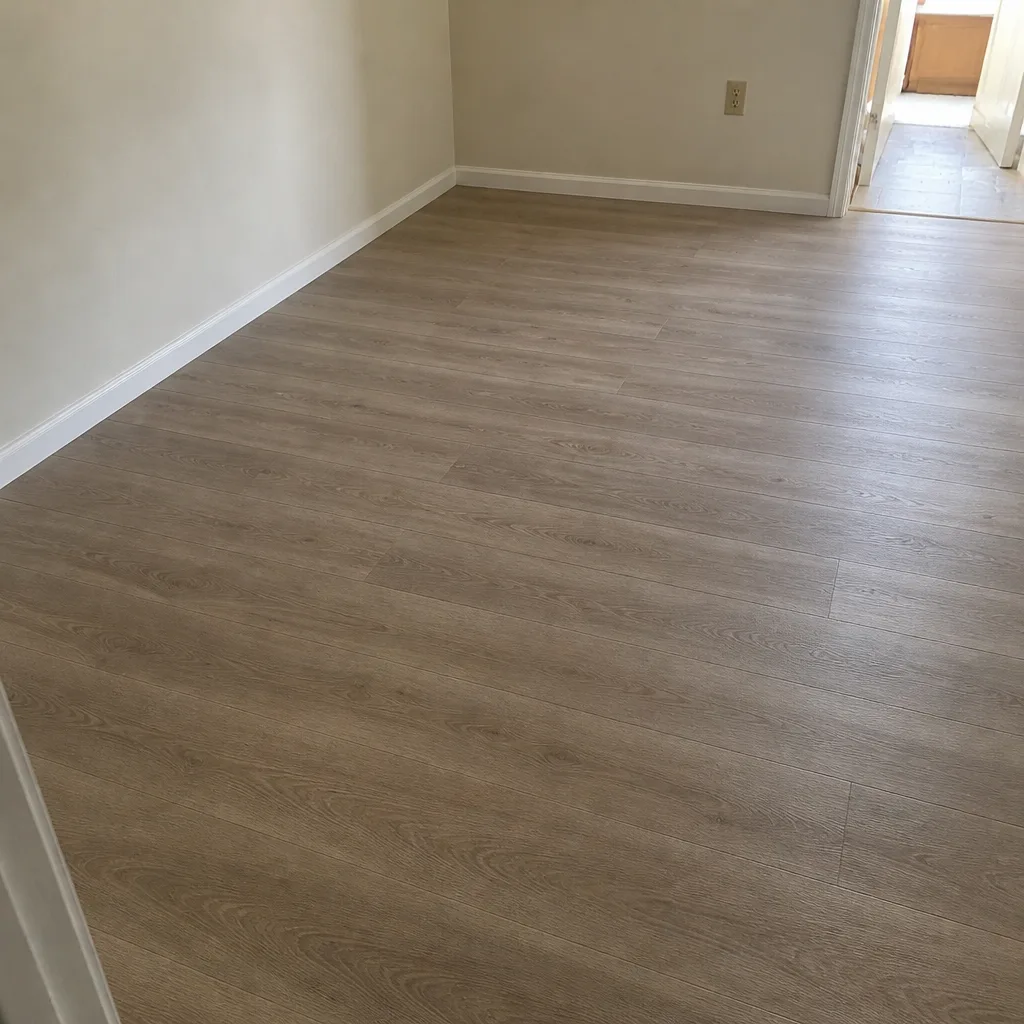 After
When to Call a Professional
Call a professional when the job involves more than a loose threshold or a single damaged plank. That includes full-room flooring replacement, any installation over a subfloor that’s visibly uneven or lifting, and hardwood refinishing where the thickness and condition of the existing floor need to be assessed first. It also includes any situation where you’ve already received a bid that was vague, a quote that asked for a large cash deposit, or an estimate from someone who couldn’t produce a license number. In Sunrise Manor, where the housing stock varies and subfloor conditions vary with it, the assessment visit is where most of the value of a professional quote actually lives. If a floor has already failed, a professional inspection tells you whether it can be repaired or has to come up. Flooring Installation Sunrise Manor offers free estimates in Sunrise Manor – call (855) 799-4650 to schedule yours.
Frequently Asked Questions
Yes. Nevada classifies floor covering as a specialty trade, and the C-16 floor covering contractor license is the classification that covers it. You can verify any contractor’s license status, classification, and disciplinary history on the Nevada State Contractors Board website. Ask for the license number before you talk product or price; a legitimate contractor provides it without hesitation.
Ask for the license number, then look it up on the Nevada State Contractors Board’s online license lookup. Confirm the classification is C-16, check the expiration date, and review any disciplinary history. The whole check takes about two minutes. Call (855) 799-4650 for an exact quote – estimates are free.
A flooring specialist is accountable for the installation, the subfloor prep, the materials, and the warranty. A general contractor typically subcontracts the flooring work to a third party, which adds a layer between you and the person actually doing the install. For a flooring-only project, working with a specialist gives you clearer accountability and fewer steps to resolve an issue.
Pricing depends on the product, the square footage, and the subfloor condition, so any accurate figure comes from a written bid after a measuring visit. Get at least two itemized bids with named products and explicit subfloor prep, then compare scope alongside price. Call (855) 799-4650 for an exact quote – estimates are free.
A proper bid itemizes square footage, subfloor preparation, material supply, the specific brand and product collection, removal and disposal, transitions and trim, and a milestone-based payment schedule. A lump-sum bid with no line items is the most common source of later disputes. If your bid is vague, ask for a written breakdown before you sign anything. Call (855) 799-4650 for an exact quote – estimates are free.
Either arrangement can work, but the warranty structure differs. Materials supplied by the contractor are typically covered by the contractor’s installation warranty; materials you supply yourself usually are not. Whichever route you choose, state it explicitly in the contract and confirm what each warranty actually covers. Call (855) 799-4650 for an exact quote – estimates are free.
The Bottom Line
Hiring a flooring contractor in Sunrise Manor comes down to a short, repeatable checklist: verify the C-16 license on the Nevada State Contractors Board site, get at least two written bids that itemize subfloor prep and name the product by brand and collection, require a milestone-based payment schedule, and get both manufacturer and installation warranties in writing. A flooring specialist will walk you through every one of those items without resistance. A generalist who can’t tell you who’s actually installing your floor is asking you to take a risk you don’t need to take. Nine brands, one installer, zero guesswork is what a flooring-only specialist offers. Ask the questions. Read the bid. Call a specialist. We answer 24/7. Fast dispatch from 7am to 7pm, Sunday through Friday. Call (855) 799-4650 to schedule your free estimate.
Written by the team at Flooring Installation Sunrise Manor.