
Last updated November 18, 2026
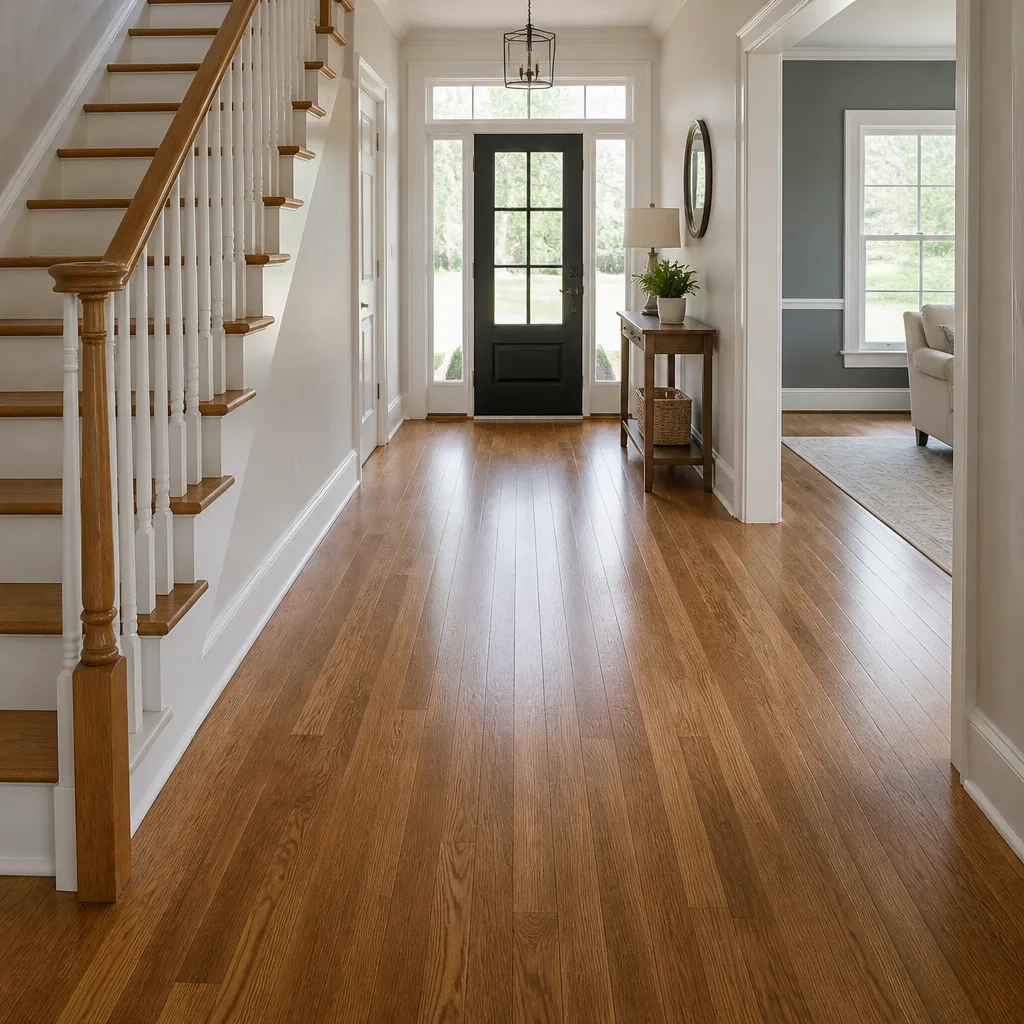 Hardwood
 Engineered hardwood
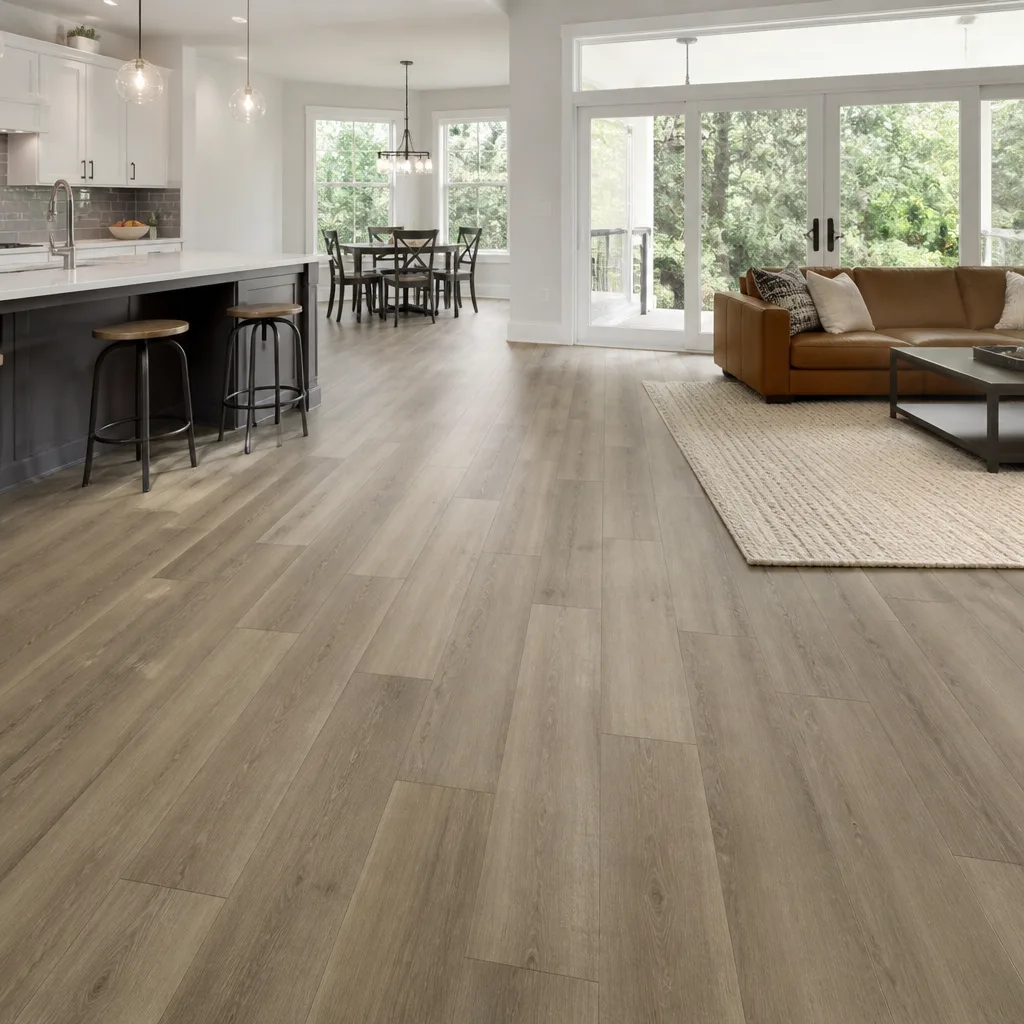 Luxury vinyl plank
 Laminate
 Porcelain tile
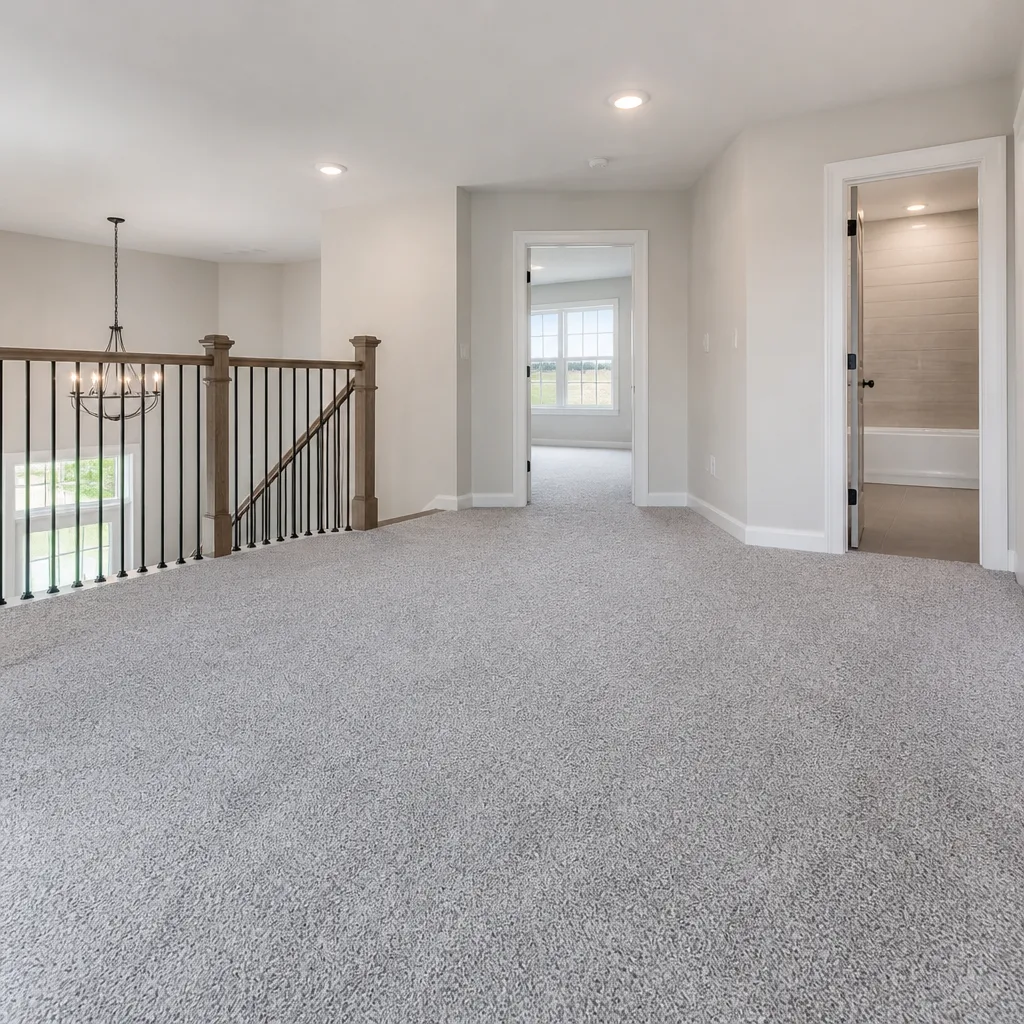 Carpet
 Shaw
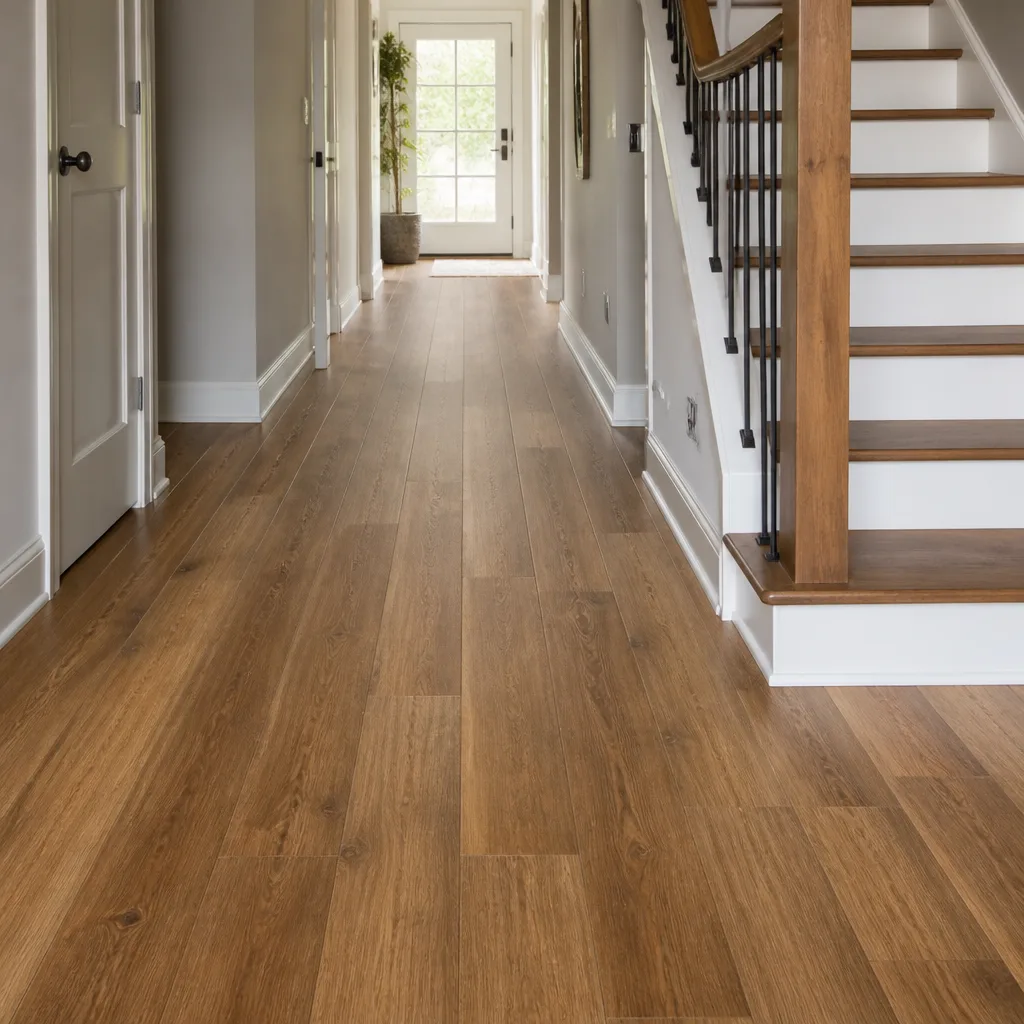 Mohawk
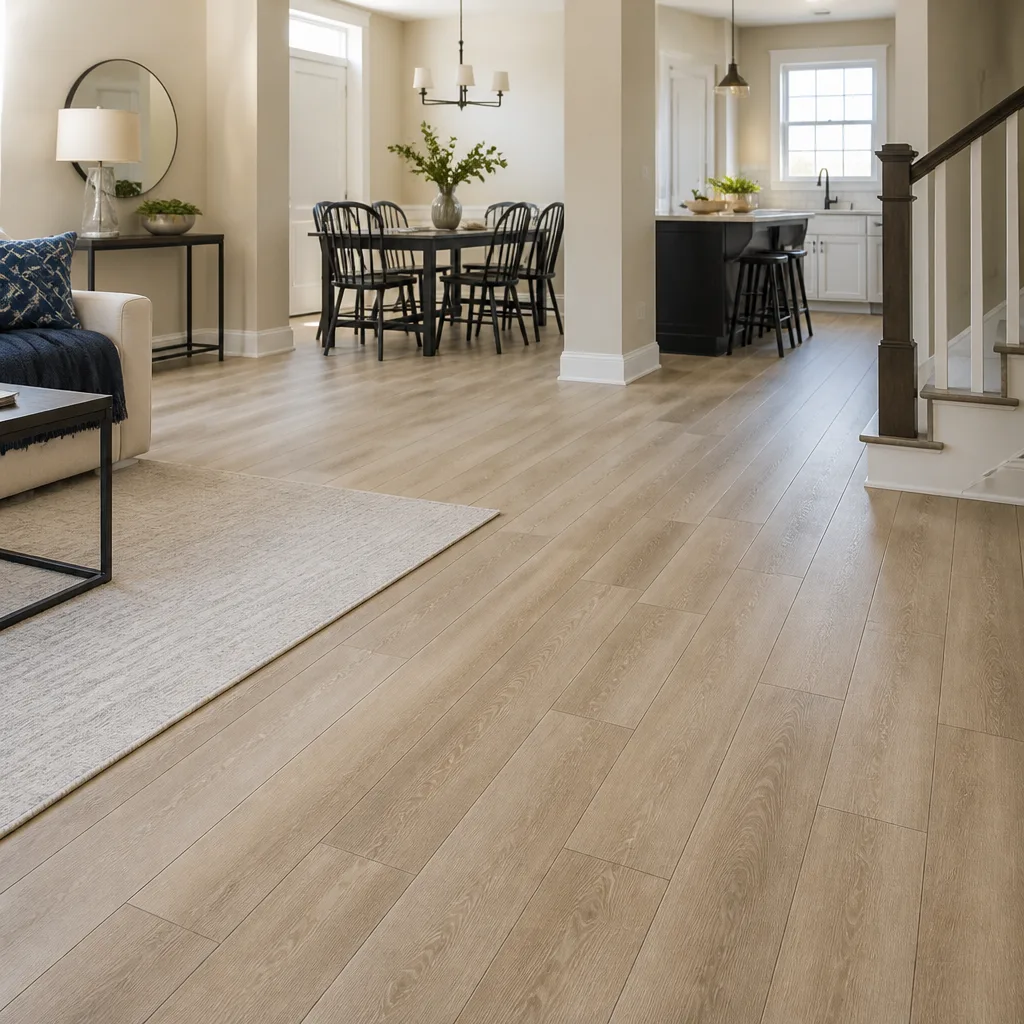 COREtec
 Pergo
Free in-home measure and written estimate: Shaw, Mohawk, COREtec and Pergo lines compared on your own rooms, with carpet, tile, vinyl plank, laminate and hardwood laid out side by side
Get your free estimateFix It or Start Over: Flooring Repair vs Replacement
The most expensive flooring mistake we see isn’t picking the wrong product. It’s paying for a repair that only delays an inevitable replacement, then discovering the floor is now harder to remove because of the patch materials used to hold it together. A cracked tile or a cupped hardwood board rarely means what it looks like. It’s usually a symptom, and treating the symptom without diagnosing the cause is the surest way to spend your money twice.
In this guide we’ll walk you through how to think about repair versus replacement in Sunrise Manor, from the substrate under your feet to the math on partial fixes. You’ll learn when a patch is genuinely smart, when it’s a band-aid, and how to arrive at the contractor conversation already knowing what you’re shopping for.
Quick Answer
Repair when the damage is cosmetic, isolated, and the subfloor or slab underneath is sound; replace when the damage traces back to moisture, settlement, or flex in the substrate, or when the affected area is large enough that matching and labor make a patch more expensive than a fresh floor. For a floor in Sunrise Manor, the deciding factor is almost always what’s happening under the surface, not how the top looks. Repair is worth it when the fix restores the floor without raising the cost of the eventual replacement.
Styles & brands we work with
- Hardwood
- Engineered hardwood
- Luxury vinyl plank
- Laminate
- Porcelain tile
- Carpet
- Shaw
- Mohawk
- COREtec
- Pergo
Table of Contents
- Start With the Substrate, Not the Surface
- Repair Thresholds by Flooring Type
- The Matching Problem: Why a Patch Rarely Disappears
- How Nevada Slab Construction Changes the Repair Math
- Refinished, Not Replaced: The Hardwood Exception
- A Simple Decision Tree Before You Call anyone
- How the Cost Logic Actually Works
Start With the Substrate, Not the Surface
Before anyone evaluates a cracked tile or a lifting board, the first question should be: what’s under it? Every surface floor sits on a substrate, whether that’s a concrete slab or a wood subfloor. If the substrate has moisture intrusion, a settlement crack, or flex, any surface repair is temporary by definition. You’re fixing the ceiling while the foundation moves.
This is the diagnostic step most homeowners skip, and it’s the one that separates a repair that lasts from a repair that re-fails in the same spot a season later. Here’s what a substrate-first check looks like:
- Look for moisture signs. Discoloration, efflorescence (that white chalky residue), soft spots, or a musty smell near the damaged area all point to moisture coming from below or from a slow leak above.
- Check for cracks or settlement. A crack in the slab that runs underneath the damaged flooring is a strong signal that movement in the substrate is what’s breaking the surface.
- Test for flex. Press down near the damage. A floor that feels spongy or moves underfoot is usually sitting on a subfloor that’s loose, water-damaged, or under-supported.
- Rule out the simple cause. Sometimes a single cracked tile is just an impact. Two or more in a line, or a cluster, usually isn’t.
If any of the first three checks come back positive, surface repair becomes a delay strategy rather than a genuine fix. That doesn’t make it wrong. Sometimes a delay is exactly what you need. But you should go into it knowing that’s what you’re buying. In our experience working across Sunrise Manor, the homes that end up doing the same repair twice are almost always the ones where the substrate question was never asked.
Repair Thresholds by Flooring Type
There’s no universal percentage that tells you when to repair and when to replace. But each flooring category has a practical threshold where the labor and matching of a patch stops making sense relative to the cost of a fresh installation. Here’s how we think about it, drawn from working with the brand-name products we install every week.
Tile (Daltile ceramic and porcelain)
With tile, replacement usually wins once you’re past roughly a fifth of the floor in a single room. Below that, a skilled tile contractor can often lift and reset individual pieces cleanly, especially if you have attic or garage stock of the same tile left from the original install. Above that threshold, the labor climbs fast because setting tile is inherently a whole-floor job. Grout lines, plane, and layout all interlock, and patching into a field of existing tile takes as much care per square foot as a full install.
Worn Hardwood Finish
Hardwood is the one category where “worn” and “damaged” are different problems. Worn finish is a refinishing job, not a replacement. Damage is structural: deep gouges, splintering, cupped or crowned boards, or boards that move underfoot. If the wood itself is sound, refinishing restores it without replacing a single board. If the boards are structurally compromised across more than a small share of the room, replacement of the affected section is the honest answer, because refinishing won’t fix a broken substrate relationship.
Carpet
Carpet is replaced far more often than it’s repaired, and the reason is simple: once a carpet is matted, stained, or worn in the traffic patterns, patching a section rarely looks better than replacing the room. A patch is a genuine option when damage is isolated (a burn, a pet stain, a small tear) and there’s matching material available. When the wear follows traffic lanes across the whole room, replacement is the answer. You can read more about how we approach it on our carpet installation page.
The practical takeaway: threshold math, not the size of the visible spot, is what decides whether a repair makes sense.
The Matching Problem: Why a Patch Rarely Disappears
Here’s a truth the industry doesn’t advertise loudly: a 10-year-old tile or hardwood patch almost never matches the surrounding floor. Dye lots change, wood ages, finishes yellow, and a tile from a discontinued run simply doesn’t exist anymore. That’s not a failure of skill. It’s how materials work.
What matters is where the patch sits. The matching problem is cosmetic in some rooms and decisive in others:
- Where matching matters: main living areas, entryways, open-plan kitchens, and any high-traffic visible zone. In these rooms, an obvious patch is a permanent reminder that the floor is a collection of different pieces.
- Where matching doesn’t matter much: inside closets, under furniture that will stay put, behind an appliance, or in a basement or storage space. In these spots, a repair with close-but-not-perfect material is often the right call regardless of aesthetics.
There’s also a less obvious catch. If you plan to sell down the road, a well-executed patch in a visible room can raise eyebrows during a walkthrough, and a poorly matched one does more than a quiet replacement would have. In our experience installing products from Shaw, Daltile, and Karndean in Sunrise Manor, the homes that age most gracefully are the ones where the visible rooms were treated as a single design decision, and the repairs were kept to the spaces nobody’s judging.
How Nevada Slab Construction Changes the Repair Math
Most homes in this part of Nevada sit on concrete slab foundations, and that shapes repair decisions in ways that a wood-subfloor home elsewhere doesn’t have to think about. The slab is a heat mass. It expands and contracts with the day-night temperature swing, and it conducts moisture from the ground beneath it. Both effects show up in your flooring.
Three complications come up repeatedly here:
- Efflorescence under tile. That white, powdery residue that appears at grout lines or along the edge of a tile floor is often salt pushed up by moisture moving through the slab. It’s a sign moisture is active, not a sign the tile failed. Patching the tile without addressing the moisture will simply give the efflorescence a new place to appear.
- Adhesive failure from heat cycling. The daily temperature swing on a slab can gradually weaken the adhesive or mortar bonding the flooring to it. When a single tile or a few boards lift, heat cycling is a common reason, and replacing just those pieces is often only a temporary reprieve.
- Re-failure in the same spot. If a repaired floor re-fails in the exact same place, that’s the slab telling you the surface was never the problem. This is the most common reason a “repair” turns into a replacement quote a year later, and it’s why the substrate-first check matters so much in Sunrise Manor and the surrounding valley communities.
Wood subfloors aren’t immune here, but they tend to respond differently: they swell, cup, or bow rather than crack. Either way, the diagnosis starts below the surface.
Refinished, Not Replaced: The Hardwood Exception
Hardwood is the category where repair most often genuinely wins, and it wins big. A solid hardwood floor that’s intact but tired, dull, scuffed, or worn in the traffic lanes doesn’t need to be replaced. It needs to be sanded back to bare wood, stained if you want a color change, and refinished. Done well, the result looks new, and it costs far less than tearing out the floor and installing a new one.
That said, refinishing isn’t automatic. It depends on the thickness of the wood and its overall condition, which we check at the estimate visit. A floor that’s been refinished several times before, or one with extensive water damage or structural movement, may not have the material left to support another sand-down. And matching a specific stain to a sample isn’t guaranteed; the wood species and its grain take color differently, so we always talk through what’s realistic before anyone touches a sander.
This is why we treat hardwood floor refinishing as a standalone service. It gives homeowners a cost-effective alternative to full replacement, with a result that restores the look of the floor without tearing it out. If you’re anywhere in Sunrise Manor and weighing refinishing against replacement, that’s the conversation worth having, and it’s a different conversation than the one about carpet or tile. Our tile flooring installation team handles the opposite end: when tile can’t be saved and the room calls for something new.
A Simple Decision Tree Before You Call Anyone
You can do most of the diagnostic work before a contractor ever steps through the door. Answer these three questions honestly and you’ll arrive at the estimate already knowing whether you’re shopping for a patch or a project.
- Is the damage isolated, or does it trace to something bigger? A single crack from a dropped pan is isolated. A crack, a lifted tile, and a soft spot all in the same area is a pattern. Pattern means substrate; substrate means replacement or, at minimum, repair plus addressing the cause.
- Is the damaged area visible every day, or tucked away? High-visibility zones favor replacement because matching will always show. Closets, storage, and hidden corners favor repair because matching doesn’t need to be perfect.
- Do you have matching material on hand? If you have leftover tile or hardwood from the original install, a patch is far more viable. If the material is discontinued, you’re patching with the closest available match, which only works well in low-visibility spots.
If the answers point toward substrate trouble, visible damage, and no matching material, replacement is almost always the value call. If they point toward isolated damage, a hidden spot, and leftover stock, a repair is a smart, contained fix. Answer these before the visit and you’ll get a more honest conversation and a faster decision. For a broader view of what full installation involves in the area, see our flooring installation Sunrise Manor page.
How the Cost Logic Actually Works
Cost is where repair-versus-replace gets emotional, because the number on the repair quote is usually smaller, and it’s easy to mistake “smaller” for “better value.” It isn’t, if the repair has a short clock on it.
Here’s the practical math. A patch is likely the better value when the repair costs a fraction of replacement and the substrate is sound, because you get the use of the floor back quickly and the eventual replacement isn’t made harder by what you did. A patch is the worse value when it buys a short delay at the cost of making the eventual tear-out more difficult. Patch materials, odd adhesive profiles, and mismatched pieces all add friction to the future job.
There’s also the question of the finish system. A repair on tile means matching grout, a repair on hardwood means matching finish, and a repair on carpet means matching pile and color. Each of those is a constraint that raises the effective cost of the patch beyond what the line item suggests. That’s why the real comparison isn’t “repair price versus replacement price.” It’s “repair price plus the cost of the eventual replacement it delays” versus “replacement price now.”
We won’t quote a number here, because pricing in this trade is set per job by a written estimate. What we will say is that every estimate should break out the substrate assessment, the materials, and the labor separately, so you can see which one is driving the number. If an estimate skips the substrate question entirely, treat the quote as provisional until someone checks underneath.
Common Mistakes to Avoid
- Fixing the surface without diagnosing the slab. In a Nevada slab home, a cracked or lifted floor is often a moisture or settlement signal. Patching the top without checking underneath is the number-one cause of repeat damage in Sunrise Manor.
- Assuming every repair must match perfectly. Homeowners sometimes reject a perfectly good repair because the patch doesn’t blend in a basement or closet where nobody will ever notice. Match matters in the rooms you use, not the rooms you store in.
- Replacing a solid hardwood floor that only needed refinishing. A worn finish is not a dead floor. Check whether the wood has life left before signing off on a full tear-out.
- Patching tired carpet in a traffic lane. When a carpet is matted across the traffic pattern, a patch in the middle of it calls attention to itself. Replace the room, not the square.
- Skipping the leftover-stock check. Before you agree to a patch, ask whether any original tile or hardwood is stored on-site. If yes, the repair gets more viable and more seamless. If no, the price and the matching risk both climb.
- Buying a repair quote that doesn’t explain what it fixes. A quote for “replacement of damaged tile” with no mention of grout, substrate, or cause is a red flag. The plan matters as much as the price.
- Treating an emergency repair as a strategy. A structural crack that lets a board lift or a tile become a trip hazard needs handling, but a stopgap is still a stopgap. Don’t let it stand in for a real diagnosis.
See the difference
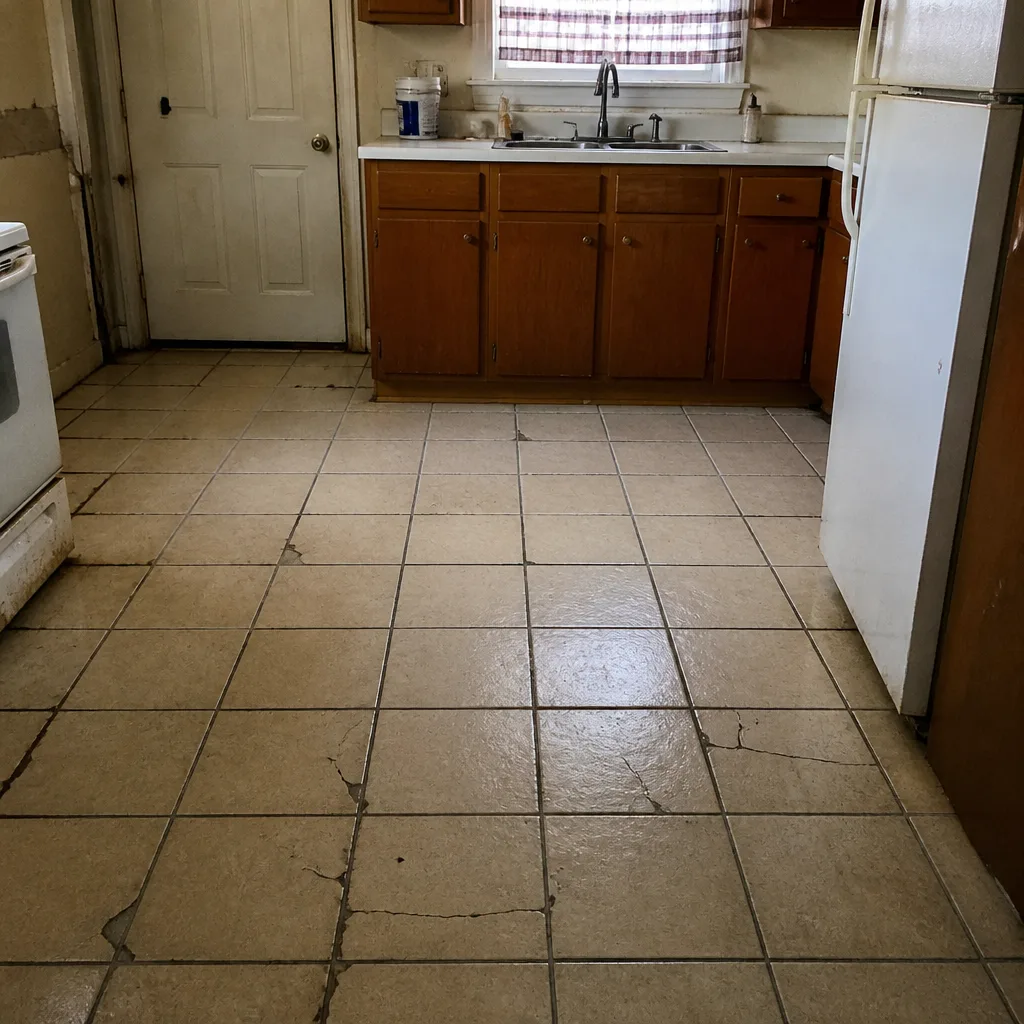 Before
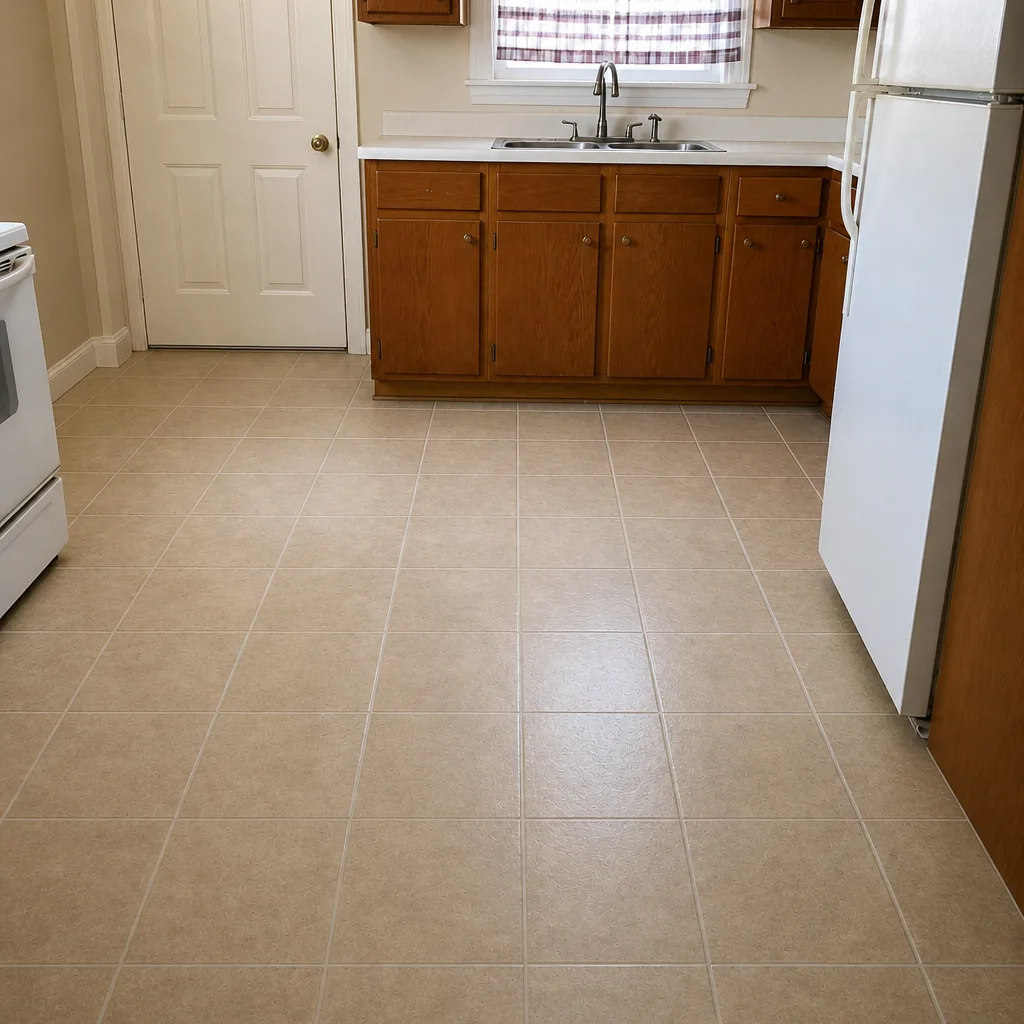 After
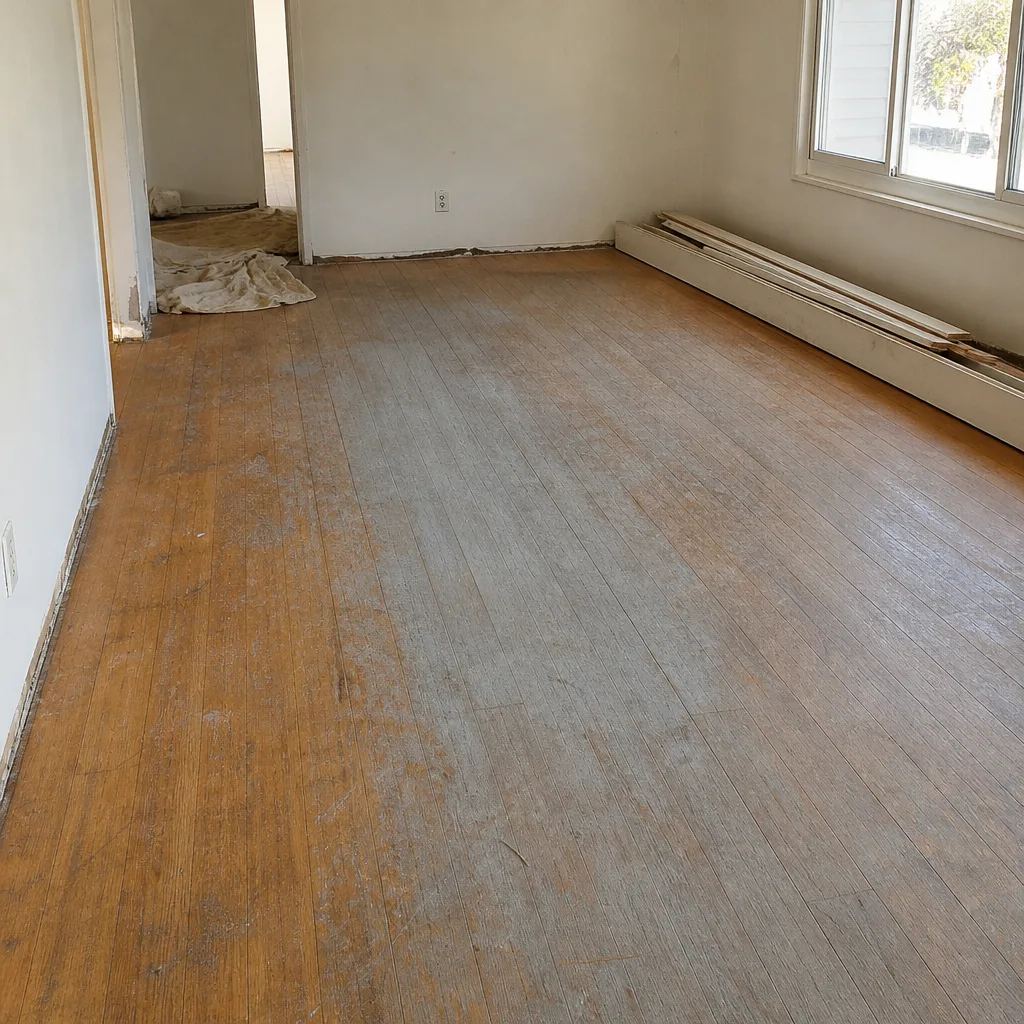 Before
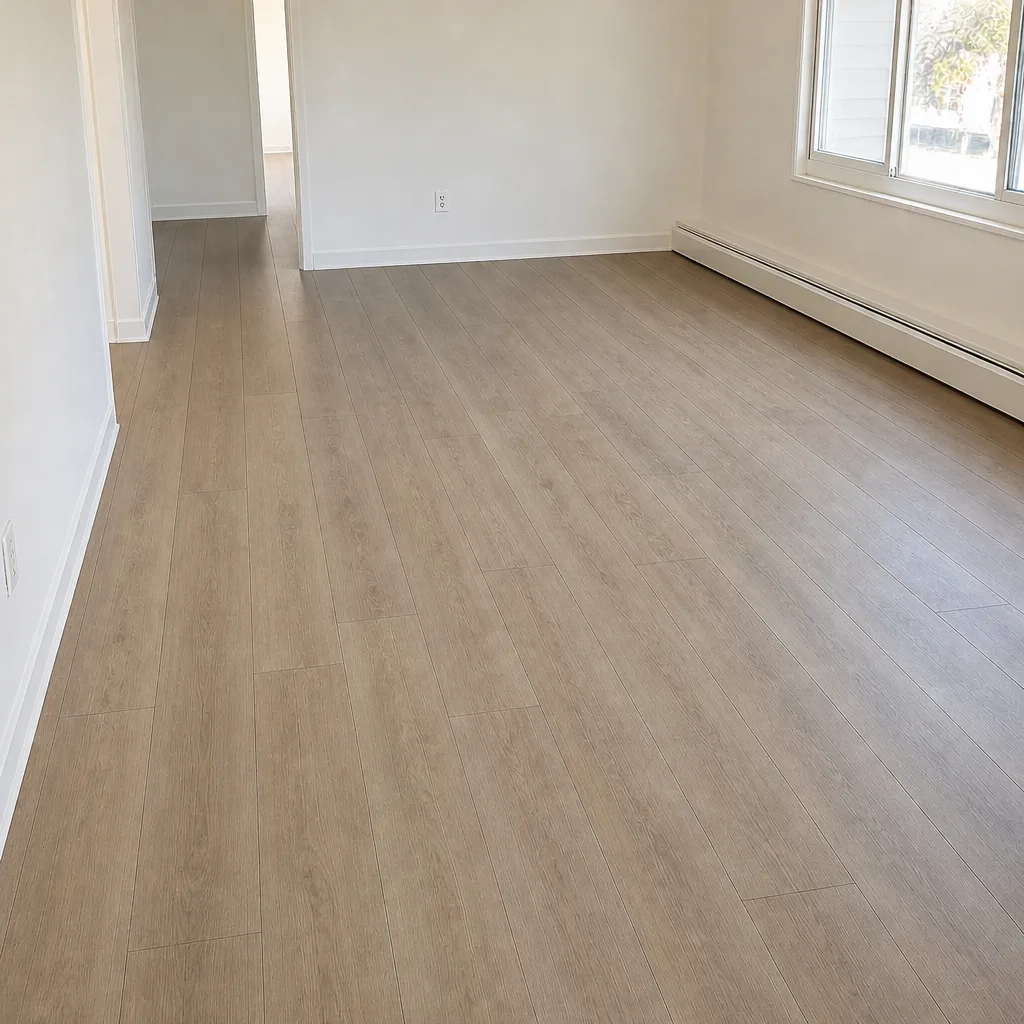 After
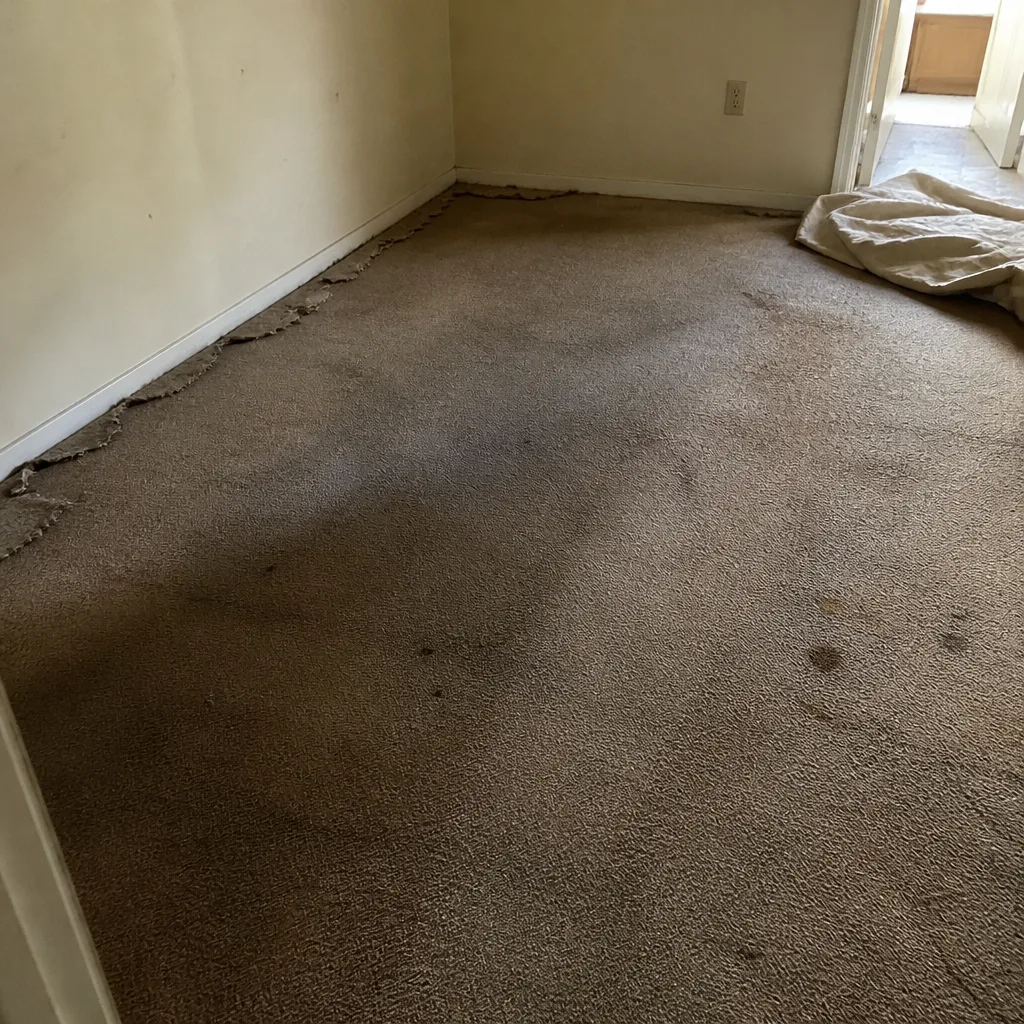 Before
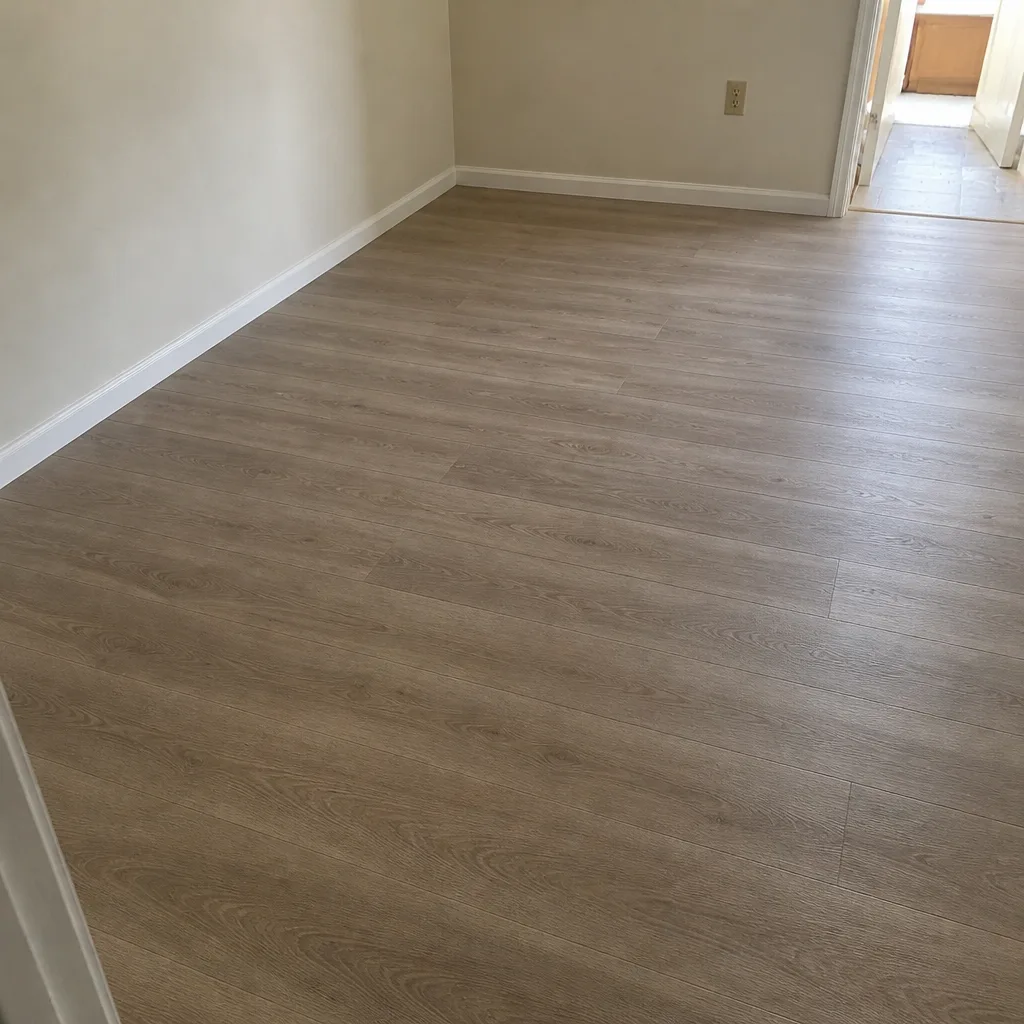 After
When to Call a Professional
Some repair decisions are safe to make on your own: a chipped cabinet kickboard, a single loose transition strip, a stain on carpet in a guest bedroom. Others carry real risk. Any tile removal near a slab with active moisture, any repair that involves lifting a large field of hardwood, any job where a repair would require digging into a subfloor or slab, and any sign of efflorescence or adhesive failure should be handled by a trained flooring professional. Get a diagnosis before you decide what to do, not after you’ve paid for a patch that re-fails.
Flooring Installation Sunrise Manor offers free estimates in Sunrise Manor, and that estimate starts with the substrate question, not a sales pitch. Call (855) 799-4650 to schedule yours. We answer 24/7, with fast dispatch from 7am to 7pm, Sunday through Friday.
Frequently Asked Questions
Start with the substrate. If the damage traces to slab moisture, settlement cracks, or movement underfoot, replacement (or repair plus addressing the cause) is usually the right call. If the damage is isolated and the substrate is sound, a repair is often smart, especially in closets, storage areas, or any room where the patch won’t be highly visible. When in doubt, get a diagnosis before committing to either path; call (855) 799-4650 for a free estimate.
Often, yes, you can repair a few tiles, especially if you have leftover tiles from the original install and the damage is isolated rather than a cluster or line. As a rough threshold, a repair tends to be cost-effective when the affected area is under about a fifth of the room. Above that, a full installation is usually the better value because the labor approaches a whole-floor job anyway. Call (855) 799-4650 for an exact answer on your specific floor.
Because the cause was never addressed. A repaired surface on top of a moving or damp substrate will re-fail because the substrate keeps doing what it was already doing. This is common on Nevada slab foundations with heat cycling and moisture, and it’s why our estimates start with a substrate check rather than a patch quote. If your floor has re-failed in the same spot, call (855) 799-4650 to book a free estimate.
In most cases yes, refinishing is a cost-effective alternative to full replacement, and the result restores the look of the floor. It depends on the thickness of the wood and its condition, which we check at the estimate visit, and a specific stain isn’t guaranteed to match a sample. When the wood is thick enough and structurally sound, refinishing is almost always the better value. Call (855) 799-4650 and we’ll tell you honestly which path your floor needs.
Rarely perfectly, and that’s normal. Dye lots, age-related yellowing, and discontinued product lines all work against a perfect match. The good news is matching matters differently by location: a patch in a closet or behind furniture doesn’t need to disappear, while a patch in a high-traffic living area almost always shows. That’s a design decision as much as a repair one, and one we walk through at every estimate. Call (855) 799-4650 to schedule yours.
Yes, our estimates are free, and every price comes as a written quote, so you know exactly what you’re paying before any work starts. The timeline for a repair or replacement depends on the scope and the materials; it’s set at the estimate once we’ve seen the floor and the substrate. Call (855) 799-4650 to schedule a free estimate.
The Bottom Line
Repair versus replacement isn’t about how bad the damage looks. It’s about whether the floor’s substrate, finish system, and remaining material life can support a fix without making a future replacement harder and more expensive. Check the substrate first. Match thresholds to square footage and visibility, not instinct. And remember that hardwood is the category where refinishing often turns a replacement quote into a much smaller job. Whether you’re deciding on a patch or a project in Sunrise Manor, a free estimate answers the question quickly, honestly, and for nothing. Call (855) 799-4650. We answer 24/7, with fast dispatch from 7am to 7pm, Sunday through Friday.
Written by the team at Flooring Installation Sunrise Manor.